From Molecules to Markets
The Origins of Markov's Insight
Imagine a simple chemical reaction. Hydrogen and oxygen molecules collide, form something unstable, and — if conditions are right — settle into a new, stable product: water.
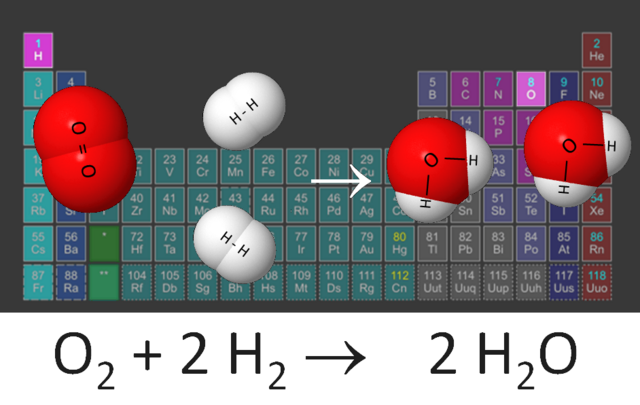
Nothing about this process is smooth or deterministic at the microscopic level. Individual molecules behave randomly. And yet, when you look at millions of them together, the outcome becomes predictable.
Chemistry works not because every particle is controlled, but because probabilities aggregate into structure.
This idea — simple local randomness creating global order — became one of the most important insights of modern science. Now scale this up from chemistry to nuclear physics.
In the late 1930s, physicists discovered nuclear fission. When a neutron hits a uranium nucleus, the atom splits and releases energy — along with more neutrons. Those neutrons may cause further fissions. Or they may escape. Or be absorbed without effect. Each individual event is uncertain. The system-level outcome is not.
This was the terrifying and fascinating question scientists faced: Will the reaction die out? Will it remain stable? Or will it escalate uncontrollably?
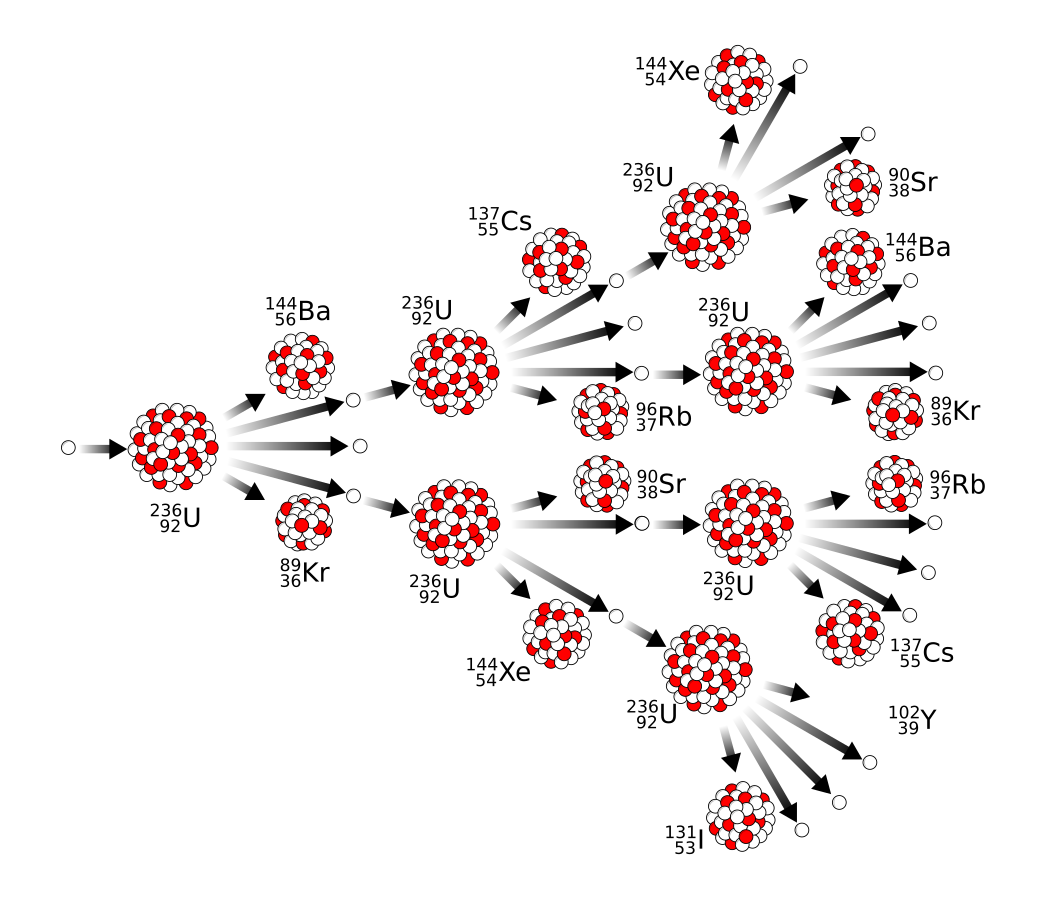
Scientists like Enrico Fermi, working on the first nuclear reactors, understood that the core challenge was not energy — it was state transitions. How likely is it that one neutron creates two? How often does the reaction move from calm to unstable? Where is the tipping point between safety and catastrophe?
The first controlled nuclear chain reaction, Chicago Pile-1, succeeded not because scientists knew exactly what would happen next — but because they understood the statistics of what could happen next. They were modeling regimes, long before the word became common.
What nuclear physics revealed was something deeper: complex systems evolve step by step, where the next step depends primarily on the current state. Not the full past. Not the origin story. Just where the system is right now.
Our Markov Entropy Regime model does exactly this: by thoroughly characterizing the current market state, we can statistically estimate the probability of the next regime.
Modern AI algorithms work in a similar way — but every system depends critically on what information is fed into it. A prediction does not work if you simply feed numerous technical indicators, volume, or price data into a model: "Garbage in — garbage out."
Our model relies on price action paired with backtested signals — the Smart Money Tracker, the Risk Indicator, and Entropy Analysis — each of which has demonstrably worked in the past. The goal is not to predict exact prices, but to understand which regime the market is entering.
The Birth of the Markov Process
This idea already had a name. Decades earlier, a Russian mathematician named Andrey Markov had been thinking about a surprisingly different problem: language.
Markov was studying sequences of letters in texts. At the time, probability theory assumed independence — each event unrelated to the previous one. Markov questioned this. He asked a radical question: What if the probability of the next event depends only on the current one?
He tested this idea by analyzing letter sequences in Russian poetry. He showed that the likelihood of a vowel or consonant could be predicted remarkably well by knowing only the preceding letter, not the entire sentence.
Markov demonstrated that history matters, but only locally — that memory can be short without being meaningless — and that structure emerges from chains of dependent events.
Thus, the Markov process was born.
What Markov could not have known was how universal his idea would become.
His simple insight — the future depends on the present state —
turned out to be the exact language needed to describe chemical reactions moving through energy barriers,
neutrons propagating through a reactor, epidemics spreading through populations,
and financial markets shifting regimes.
Markov Regimes in Markets
In markets, just like in nuclear reactions, individual trades are random, participants act locally, feedback loops amplify small changes, and stability can turn into instability without warning.
The market does not remember its entire past. It remembers its current regime.
Low Volatility Regime
Trends persist, pullbacks are shallow, momentum strategies work. The system favors continuation.
High Volatility Regime
Mean reversion dominates, trends break down, risk management becomes critical. The system favors reversal.
Low volatility behaves differently from high volatility. Liquidity-rich environments transition differently than stressed ones. Calm markets and fragile markets follow different rules.
Markov models give us a way to formalize this intuition: define states, measure how often transitions occur, and understand where tipping points lie.
Markov models do not predict exact outcomes. Neither did Fermi's reactor models. What they do is far more valuable: they tell us when a system is drifting toward danger.
From molecules to neutrons to markets, the story is the same. Large-scale outcomes are shaped not by single events, but by chains of probabilistic transitions.
The Core Insight
"That insight began with a chemist's reaction, was tested in the heart of a nuclear reactor, and was formalized by a mathematician counting letters in poetry. That is the quiet power of Markov's idea — and why it still matters today."