Markets turn Bearish - Is there more to come?
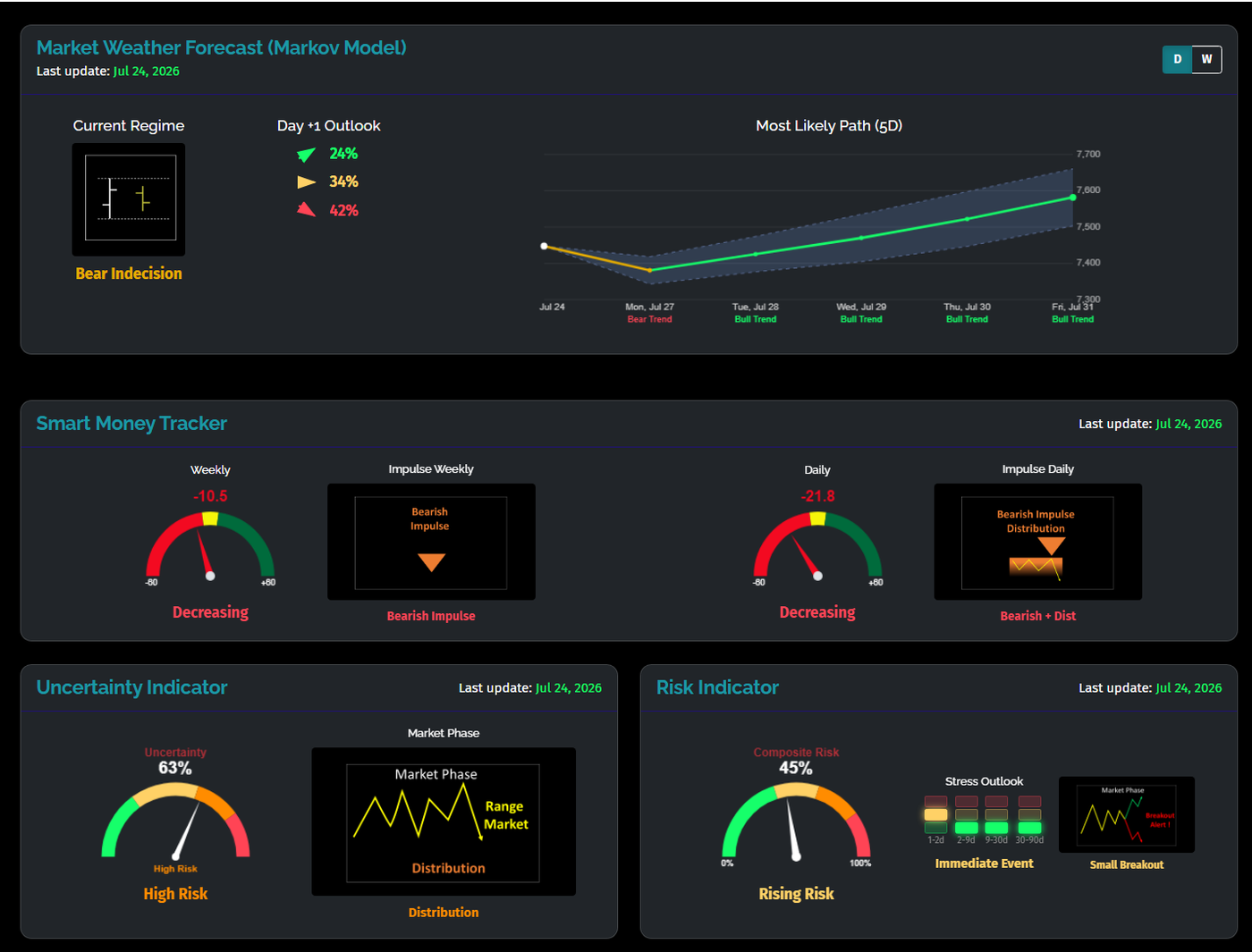
Overview - Bearish Signals mount
With Bearish Signals appearing all over the place, now we see also the VIX rising. Technology and Semiconductors are affected the most. Are we whitnessing the burst of the AI bubble?
Hypersaclers and Seiconductors sell off despite high demand
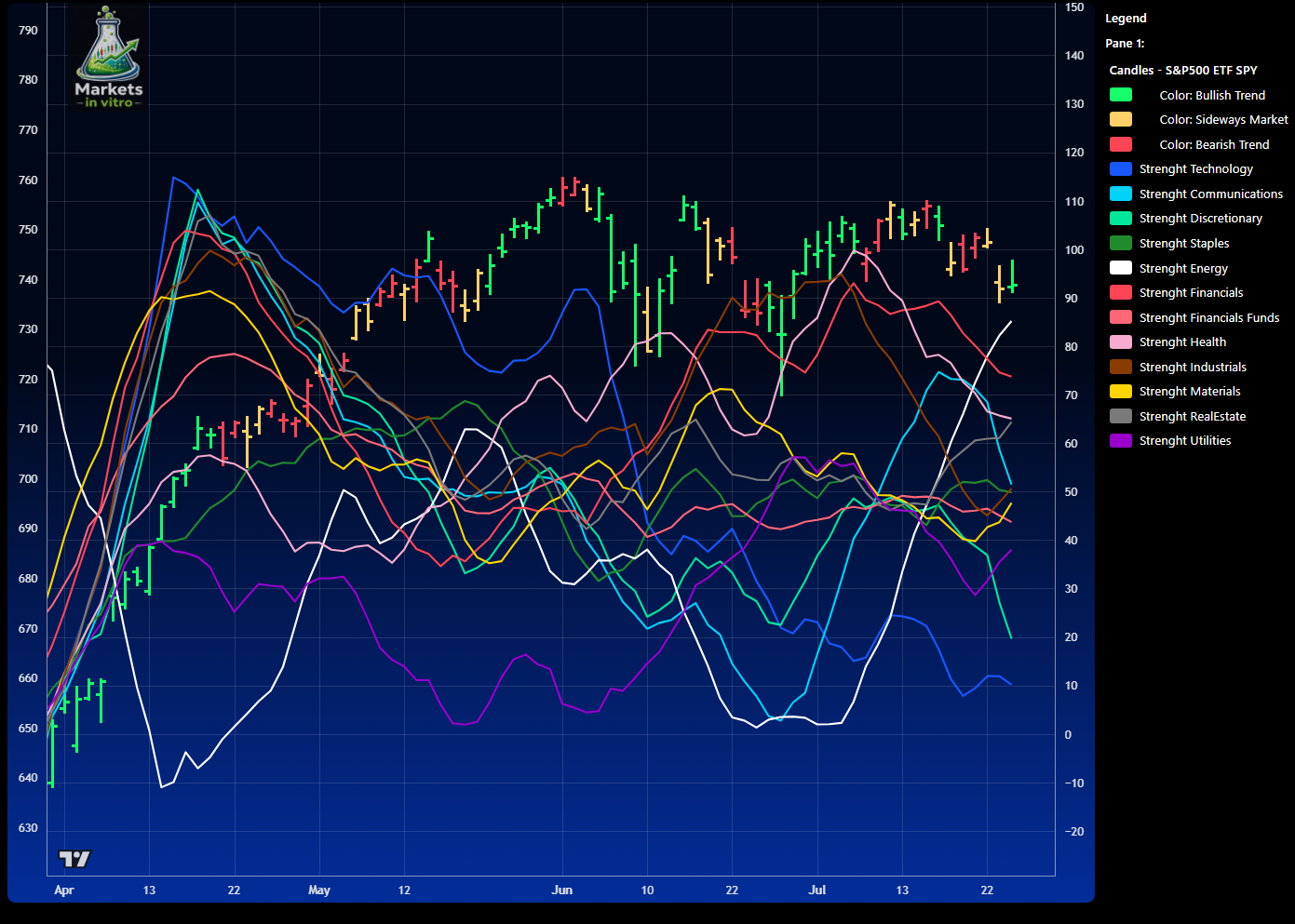
Sector Strenght - Tech falls as Energy rises. Defensives gain momentum
Data center hardware demand remains exceptionally strong, with no clear signs of a slowdown heading into Q3. Recent results from Intel, AMD, Besi, and Super Micro all point to sustained AI infrastructure spending by hyperscalers, supported by record semiconductor equipment orders, expanding AI server production, and improving outlooks across the supply chain. The primary risks are no longer demand-related but stem from execution challenges, including power grid constraints, transformer shortages, and increasingly demanding market expectations after a sharp sector rally. In other words, the key question for upcoming earnings is not whether AI demand is weakening, but whether growth can continue to exceed the market’s already lofty expectations. Sources: Reuters – Intel raises CapEx on AI demand: https://www.reuters.com/business/intel-rises-strong-forecasts-signal-ai-boost-turnaround-2026-07-24/ • Reuters – Besi reports record AI-driven orders: https://www.reuters.com/technology/besi-posts-sharp-rise-quarterly-orders-2026-07-23/ • Reuters – AMD ramps Helios AI server production: https://www.reuters.com/business/amd-expected-launch-next-generation-ai-infrastructure-challenge-nvidia-2026-07-23/ • Omdia analysis on power constraints: https://www.manufacturingdive.com/news/opinion-omdia-ai-semiconductor-chip-scarcity/817172/
Smart Money
We don’t see often such and ammount of bearish signals all at once: The Smart Money Tracker has turned red on the Daily and on the Weekly timeframe, with a general seasonal weakness until the mid-term elections in October.
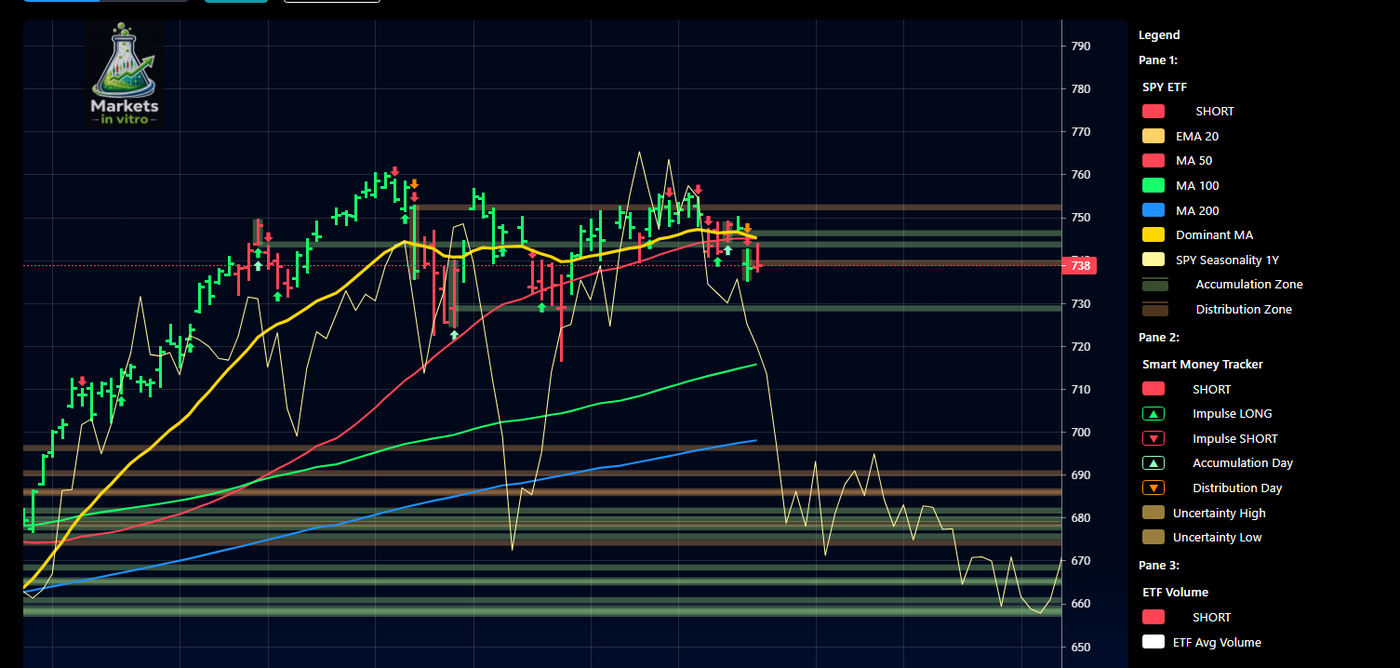
Bearish Impulse and a strong Distribution pattern
The S&P500 has also closed the week below the dominant Moving Average and with a lack of good wupport zones below 7300, it opens up a potential correction to the Daily 100 or 200 Moving Average, thus the 7000 level for the S&P 500 is in the cards.
Where is the Risk?
For the first time in a while we see a spike in our Risk Indicator
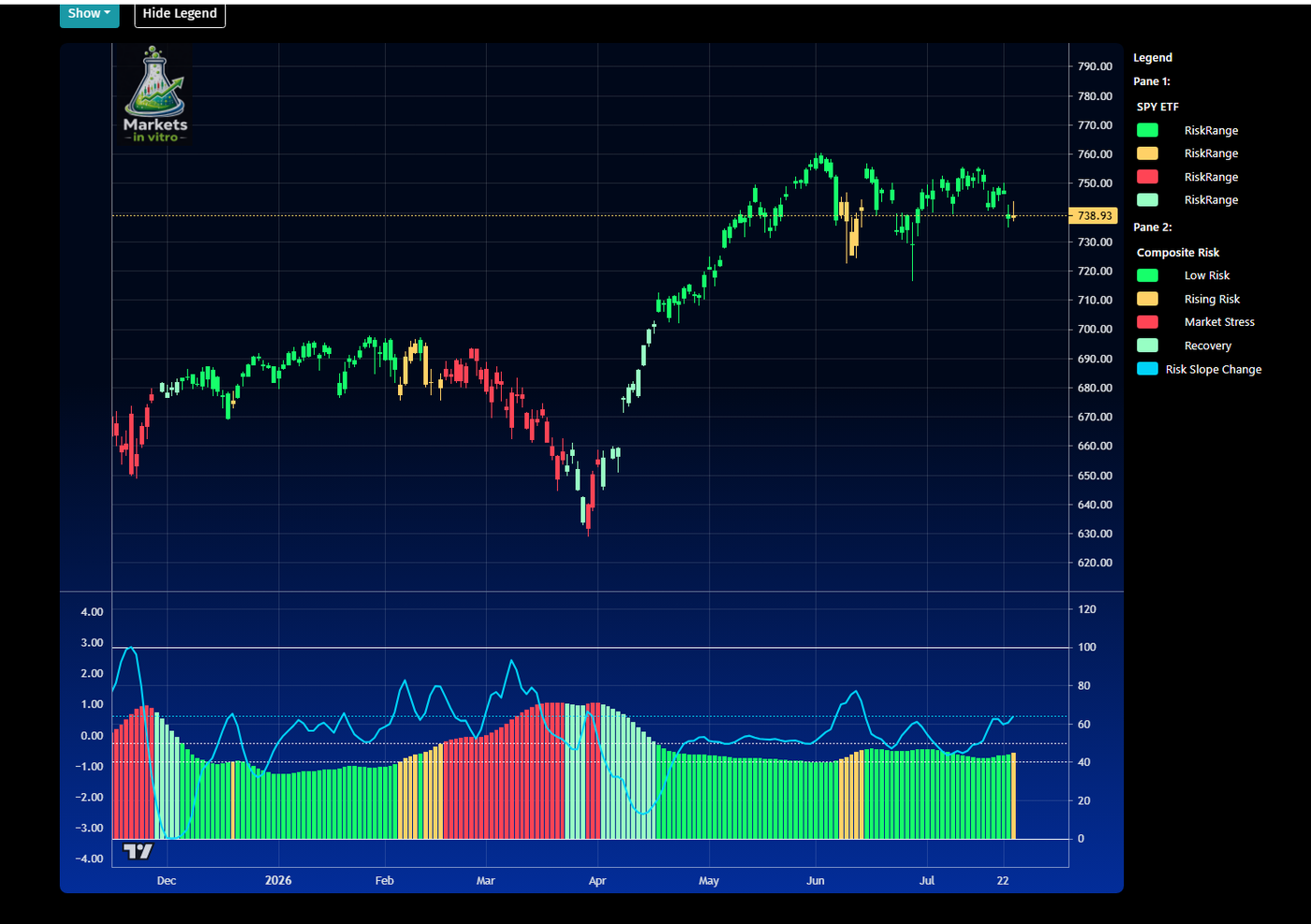
Composite Risk Indicator spikes to yellow
While most Volatility measures are only slightly elevated, the Nasdaq Volatility increased notably, bearing the potential for more near-term sells. But the big elephant in the room is of course the rising crude price, claiming again the 100$ level and the significantly elevated US-treasury rates: the latter put pressure on the FED , leading to increased Volatility in the SOFR, the Secured Overnight Financing Rate, which is the benchmark U.S. overnight interest rate, reflecting the cost of borrowing cash overnight collateralized by U.S. Treasury securities. This is an early warning signal, indicating that something is in the bushes. The hight Treasury rates threaten expected FED rate cuts and, combined with rising inflation, could force the FED to rise rates again.
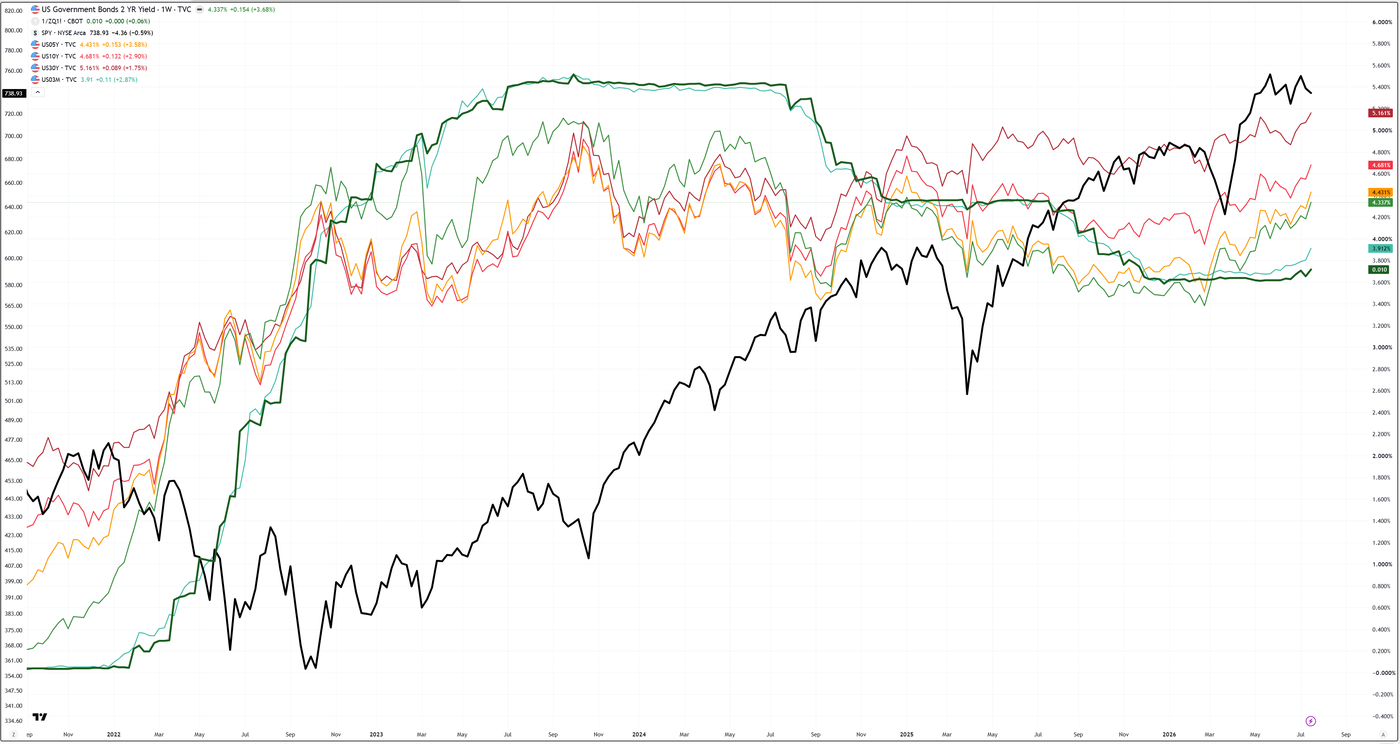
US Bond Yields 3M - 30Y) vs. FED rate (dark green) and S&P500 (black)
The US3M tends to antivcipate the FED Funds rate and is now in a sharp upward move.
And this is where investor’s excessive lverage becomes a problem: U.S. equity markets are becoming increasingly dependent on leverage, with near-record stock prices and relentless demand for technology and AI shares driving a surge in short-term financing needs. Although funding conditions have eased since the sharp spike in late June, borrowing costs remain elevated, reflecting sustained demand for leveraged positions through the equity repo market. Market participants warn that limited dealer balance sheet capacity, combined with concentrated leverage in a handful of high-growth sectors, leaves the market vulnerable to renewed funding stress—particularly around quarter-end periods when liquidity typically tightens. Unless dealer capacity expands or equity valuations cool, the growing reliance on leverage could amplify volatility and increase the risk of a broader market correction. ce: Reuters, U.S. markets brace for renewed funding pressure as leverage rises Reuters
The FED’s common approach to is flooding the markets with liquidity. But the already high inflation, which consumers are burdened with, might limit this option, as we are already seeing that the US consumer is forced to reduce spending not only on Discretionary but also on Staples: U.S. consumers are becoming increasingly value-conscious, even in traditionally defensive consumer staples categories, as persistent inflation and economic uncertainty drive a broad shift toward lower-cost alternatives. Shoppers across all income levels are trading down from premium national brands to private-label products at retailers such as Walmart, Aldi, and Target, prompting grocers to aggressively expand their own-brand offerings. Industry analysts increasingly view this as a structural change in consumer behavior rather than a temporary inflation response, suggesting that branded consumer staples companies could continue to face pressure on pricing power, volumes, and market share. Reuters – How the hunt for value sparked a U.S. private-label revolution Stapels is therefore the weakest sector among the Defensives.
Outlook
This could be a good moment to follow the general Money flow, which is currently not into US Equities and not into US Bonds, but into Commodities and Currencies. Our Commodities Screener represents a great tool to find opportunities in other markets.
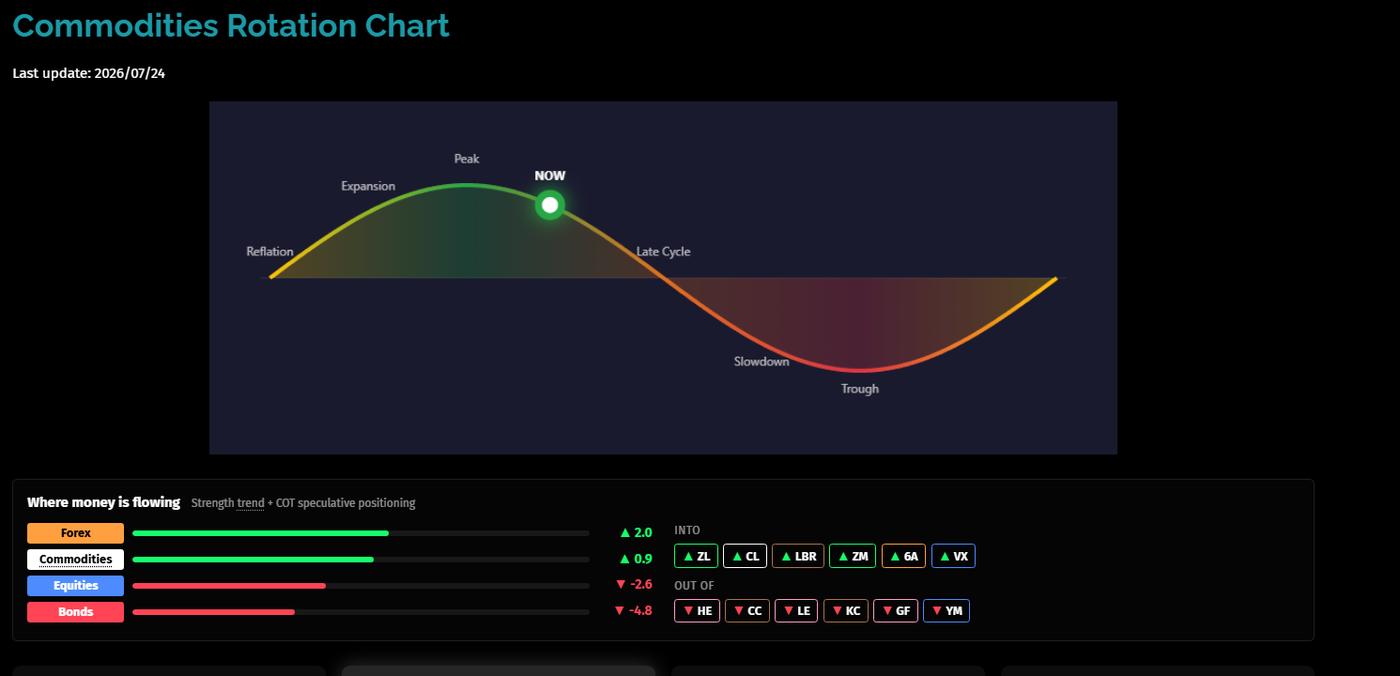
Commodities Cycle
The Commodity Index shows a strong upward momentum, driven by Energy, Crypto, Metals and even Grains.
Lumber is currently in a COT Risk-On regime, with suspicious Insider buys appearing in some Lumber stocks:
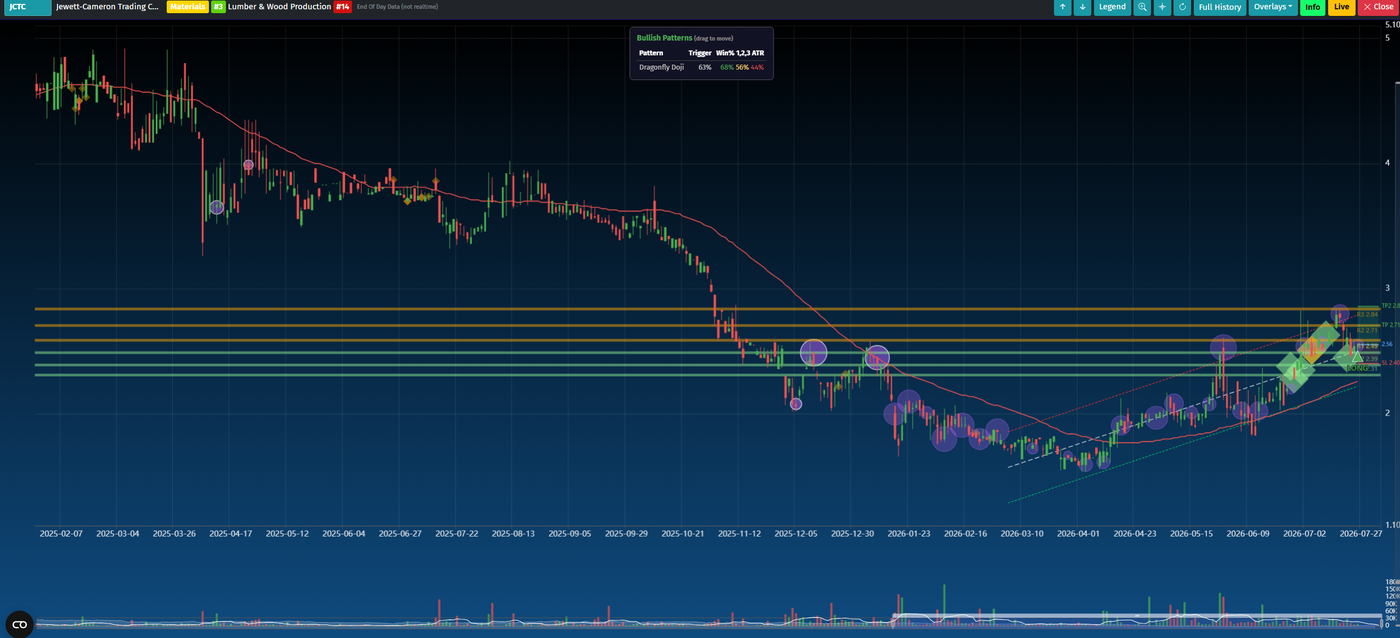
Analysis Chart of Jevett-Cameron Trading Company
The recent cluster of Insider Buys marks appears at the end of a broad basing pattern. Find more opportunities in our Stock Screener