Full recovery?
Full recovery?
As US Treasury yields keep dropping, the Composite Risk indicator switched to Recovery regime.
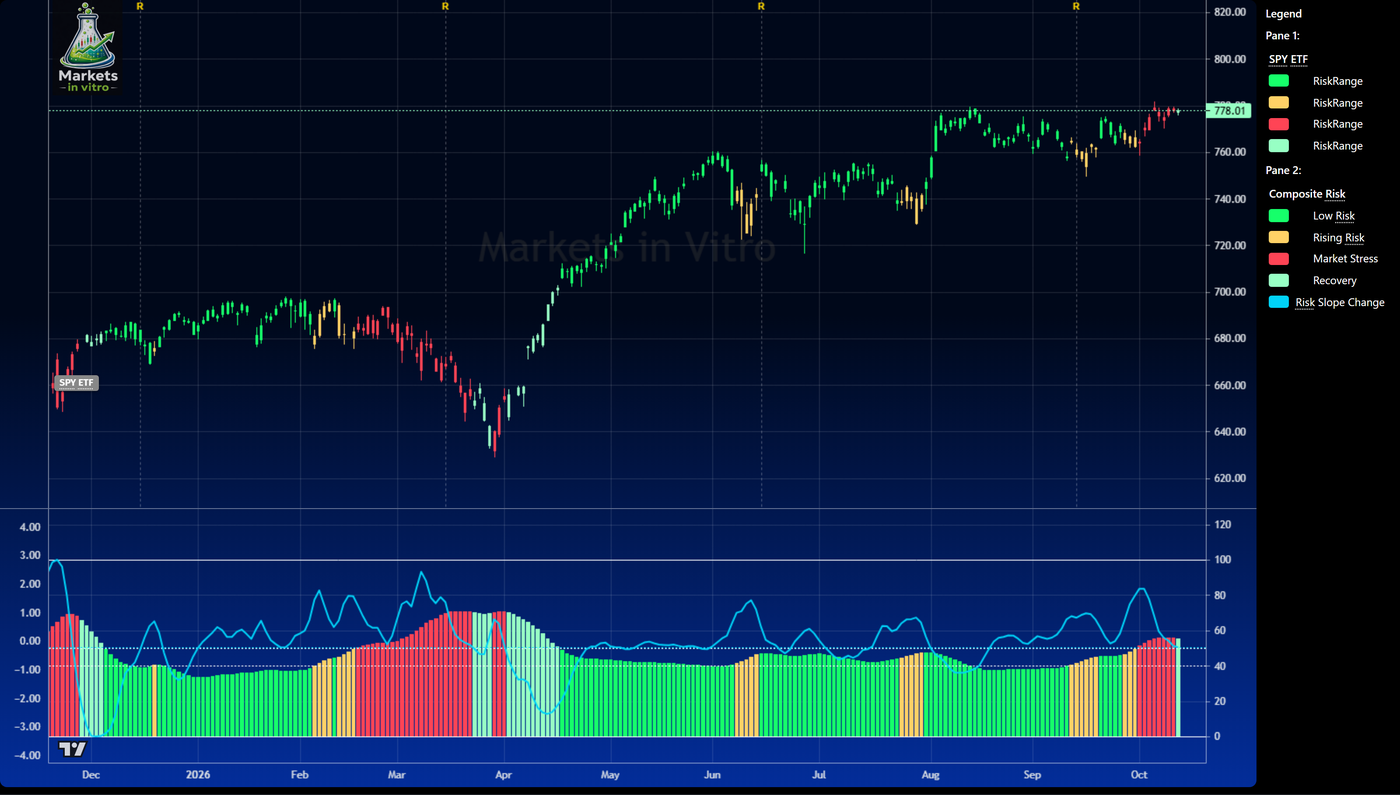
Figure: Composite Risk Chart → Recovery
Does this mean next rally ahead?
As we noted in our last video, market breadth is recovering. The Bullish Percent Index shows a growing share of stocks exhibiting bullish P&F patterns.
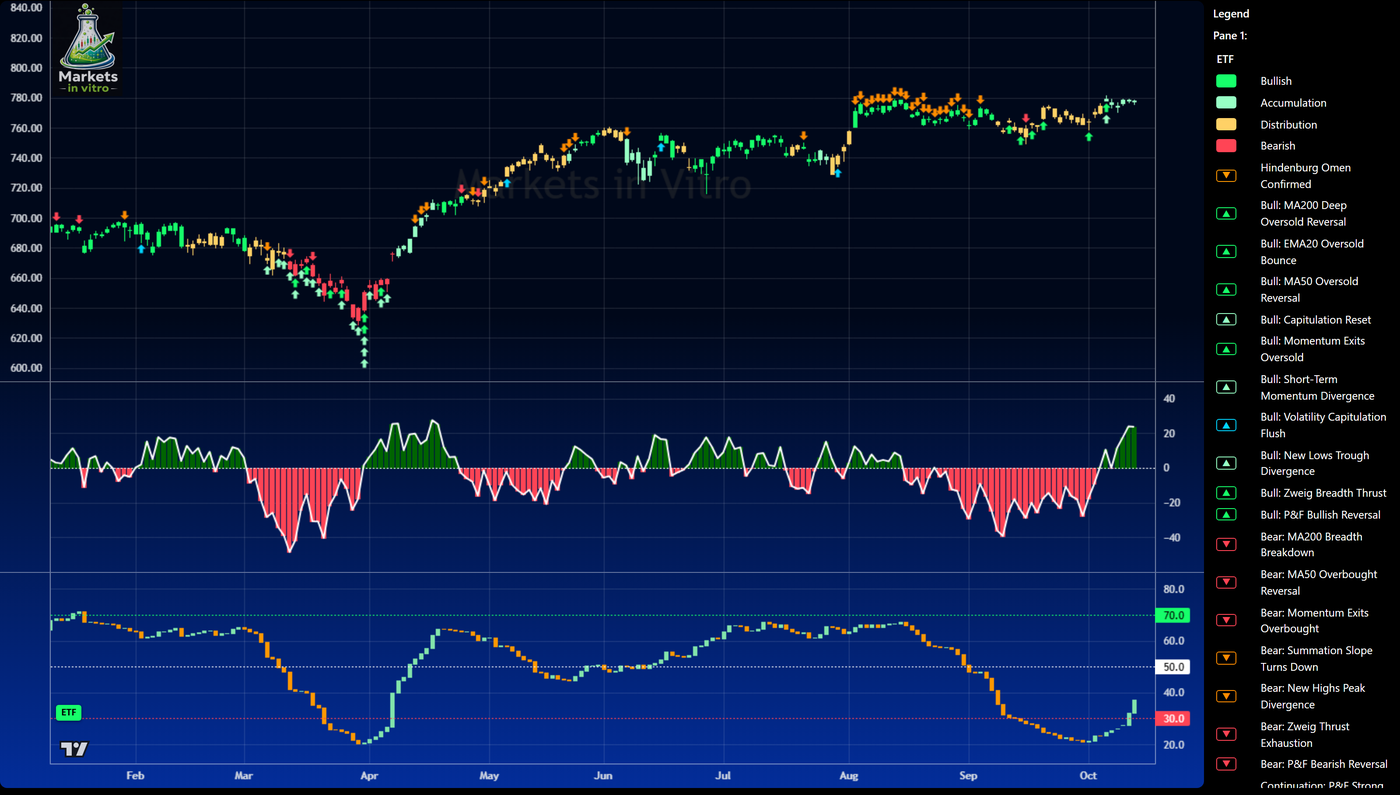
Figure: Market Breadth Indicators →
Alongside rising Treasury yields, credit default swap spreads widened materially, affecting even formerly strong AI plays.
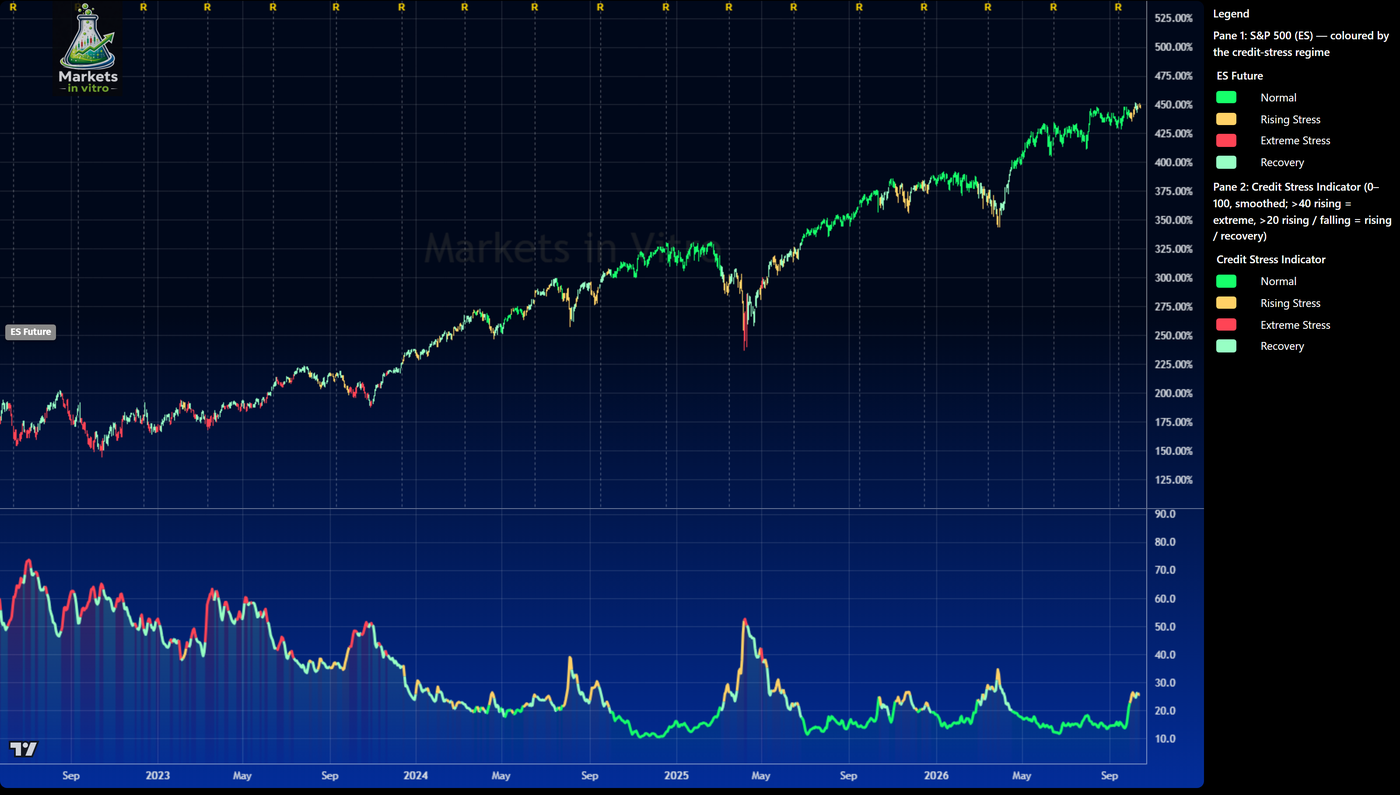
Figure: Credit Stress Regime →
Stress is building — the smoothed composite is at 26, above the 20 threshold and still climbing. Past 40 it turns into extreme stress.
Not yet a concerning CDS level, but equities are reacting calmly to yield levels not seen since the Great Financial Crisis.
Jamie Dimon Warns: Markets Are Underpricing Risk
JPMorgan Chase CEO Jamie Dimon warns that markets may be underestimating geopolitical and fiscal risks. In a recent CNBC interview, Dimon said he is reluctant to buy either broad equities or long-dated U.S. Treasuries at current valuations, citing persistent inflation, geopolitical tensions, rising defense spending, and widening deficits. Even with inflation back to 2%, he believes 10-year Treasury yields should remain around 4–4.5%, leaving limited upside for bond investors.
Dimon warns that mounting government debt could trigger a bond-market repricing as investors demand higher term premium to finance persistent fiscal deficits. That would pressure stocks and bonds simultaneously, breaking traditional 60/40 diversification. While acknowledging economic resilience and AI's long-term potential, he cautions that returns on technology capex may take longer to materialize than markets expect. His central message: market resilience should not be mistaken for an absence of systemic risk.
Meanwhile, investors are piling into Money Market Funds to lock in high short-end yields. ETF inflows are rotating out of technology and semiconductors into money market funds, as our analysis shows.
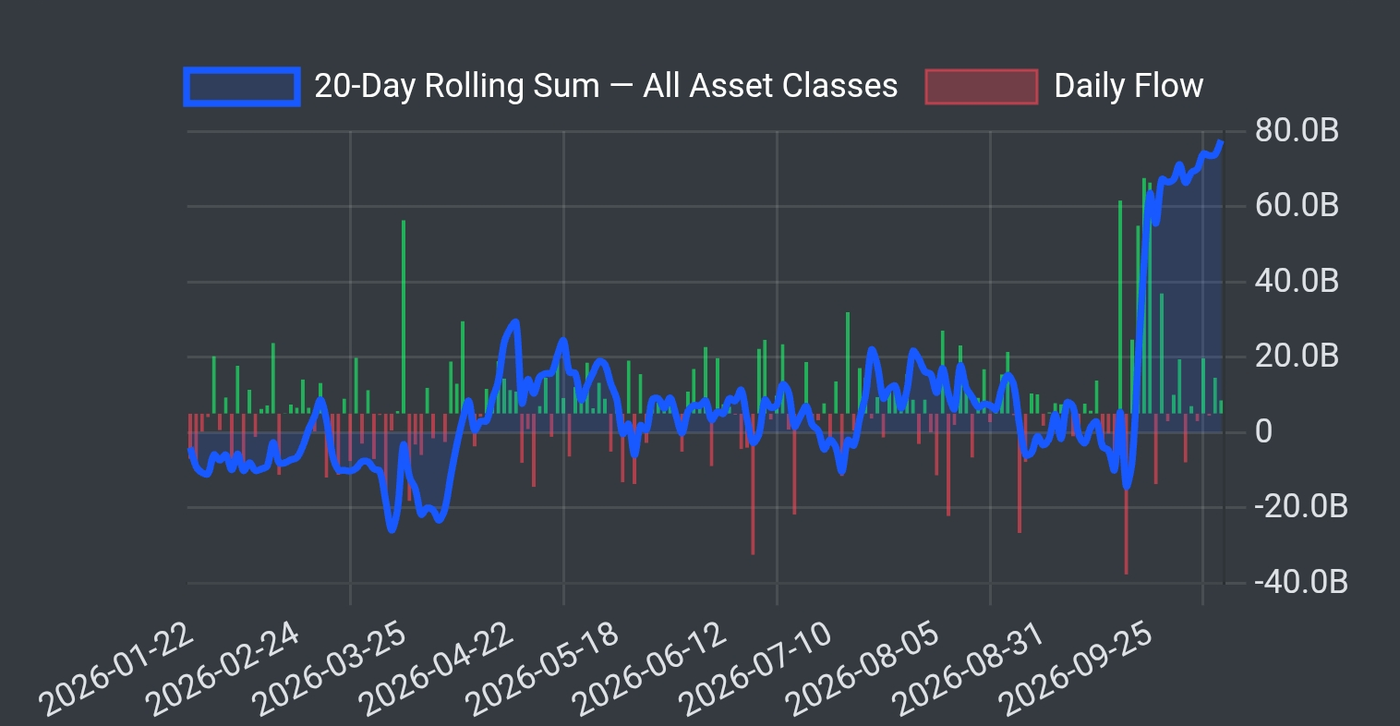
Sector rotation is defensive and capital is fleeing into bonds. What are markets pricing in for the upcoming elections?
US Midterms 2026: Political Uncertainty Meets a Bull Market
With the November 3 midterms approaching, polls indicate a shift in the political landscape. The latest Reuters/Ipsos survey shows Democrats leading Republicans by roughly 7 points among registered voters, while Morgan Stanley reports a widening Democratic advantage in national polling. National preferences do not translate directly into congressional seats. For markets, the key question is whether a shift in congressional control would materially alter fiscal policy, corporate taxation, or regulation. Gridlock could stabilize policy by limiting major legislation, but increased scrutiny of technology, AI, and energy companies introduces new risks. Elevated deficits and potential Treasury-market volatility remain concerns.
Historically, midterms have been followed by strong equity performance. Per BlackRock's historical analysis, the S&P 500 gained an average of 14.1% in the six months following midterms since 1970, versus 5.7% in comparable non-midterm periods. This year's market has already shown unusual strength, suggesting investors may be looking past political uncertainty. Morgan Stanley Research argues that monetary policy, corporate fundamentals, and structural investment themes will matter more than the election outcome. The critical question is whether markets have priced in a benign political transition while underestimating macro risks. A post-election relief rally is possible, but rising Treasury yields, deteriorating liquidity, or weakening earnings expectations could quickly challenge the bullish narrative.
Midterm Seasonals
The Markets in Vitro Seasonal screener finds generally positive stock performance around midterms.
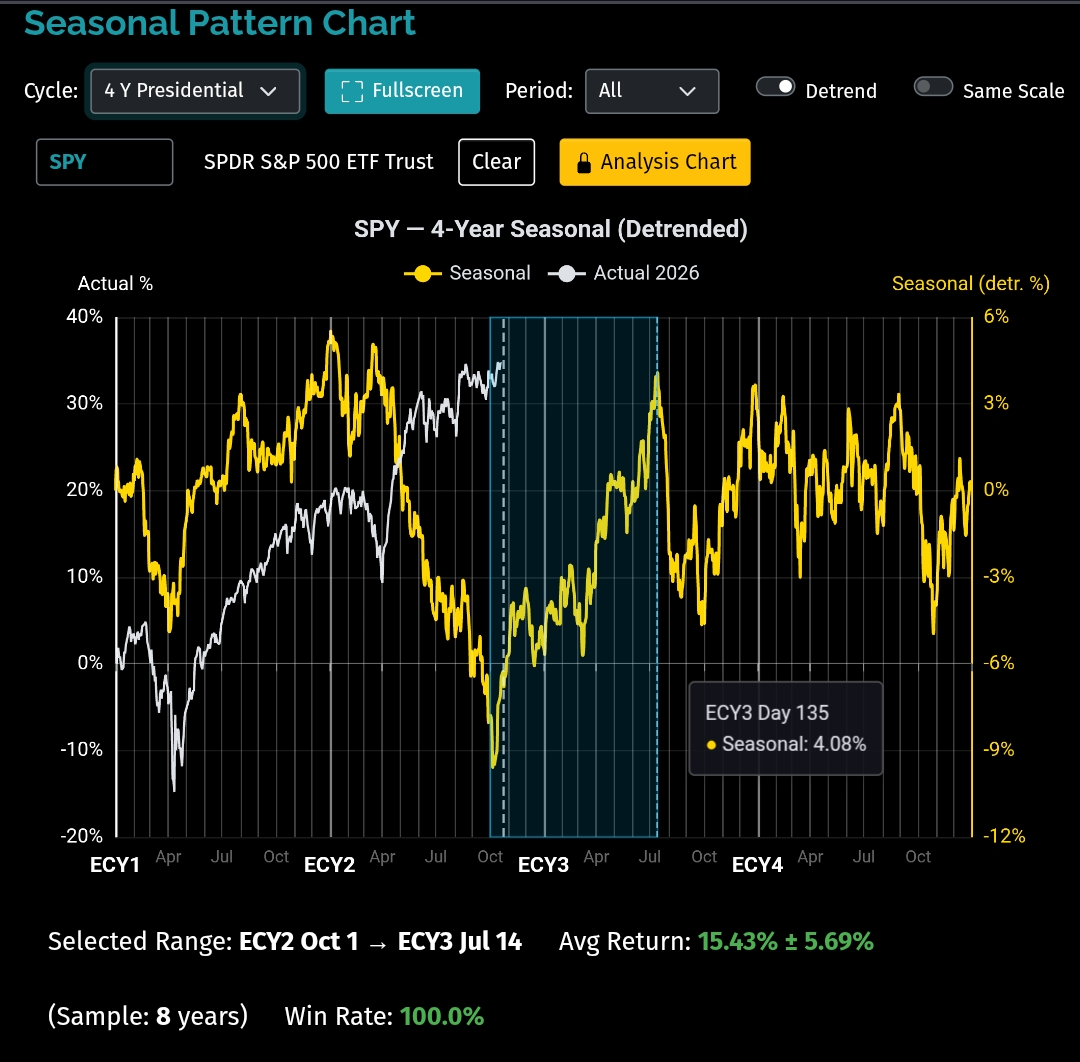
Comparing Republican and Democratic presidencies, SPY performance after the midterms diverges:
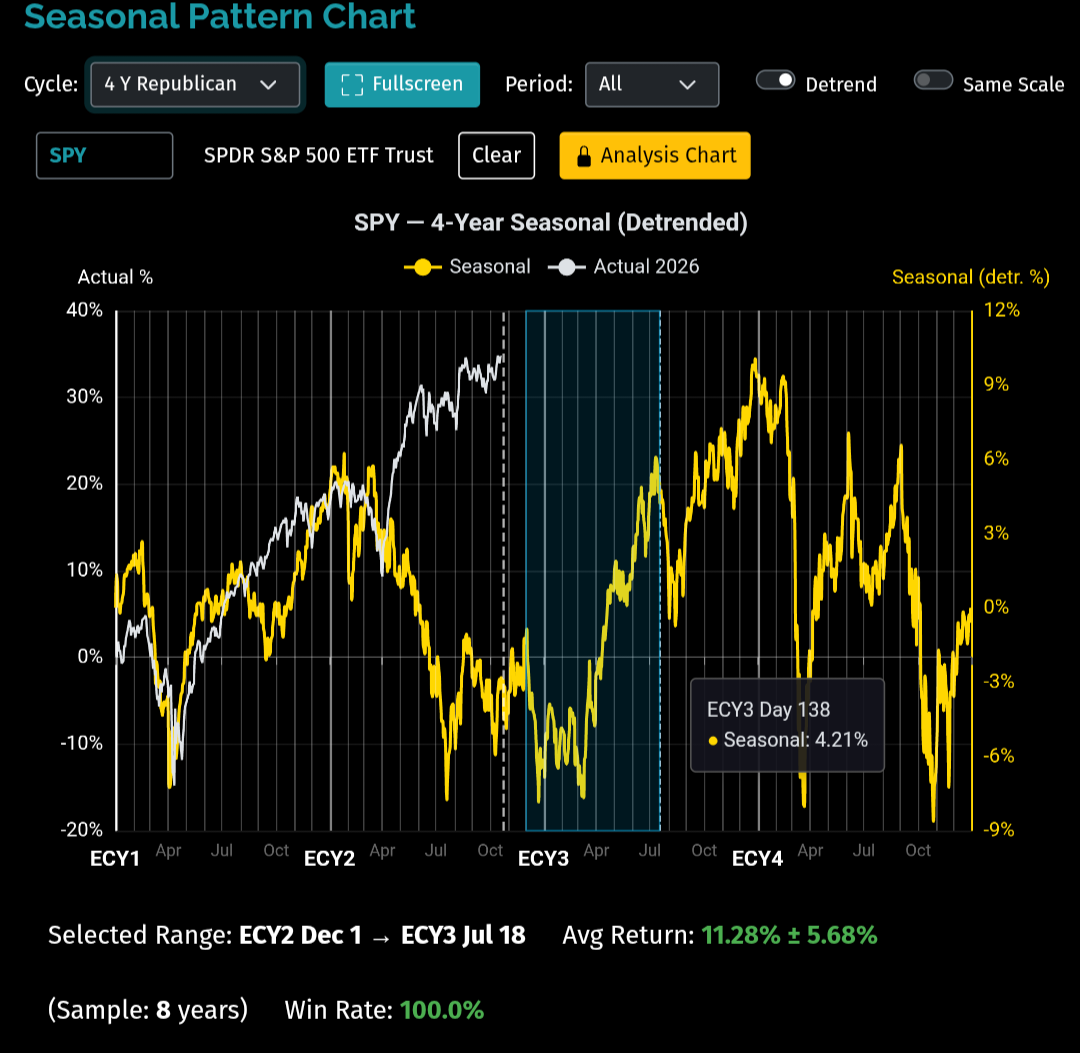
Under Republican presidencies, performance for the rest of the year is generally weak, with bullish strength only arriving in Q2 of the following year.
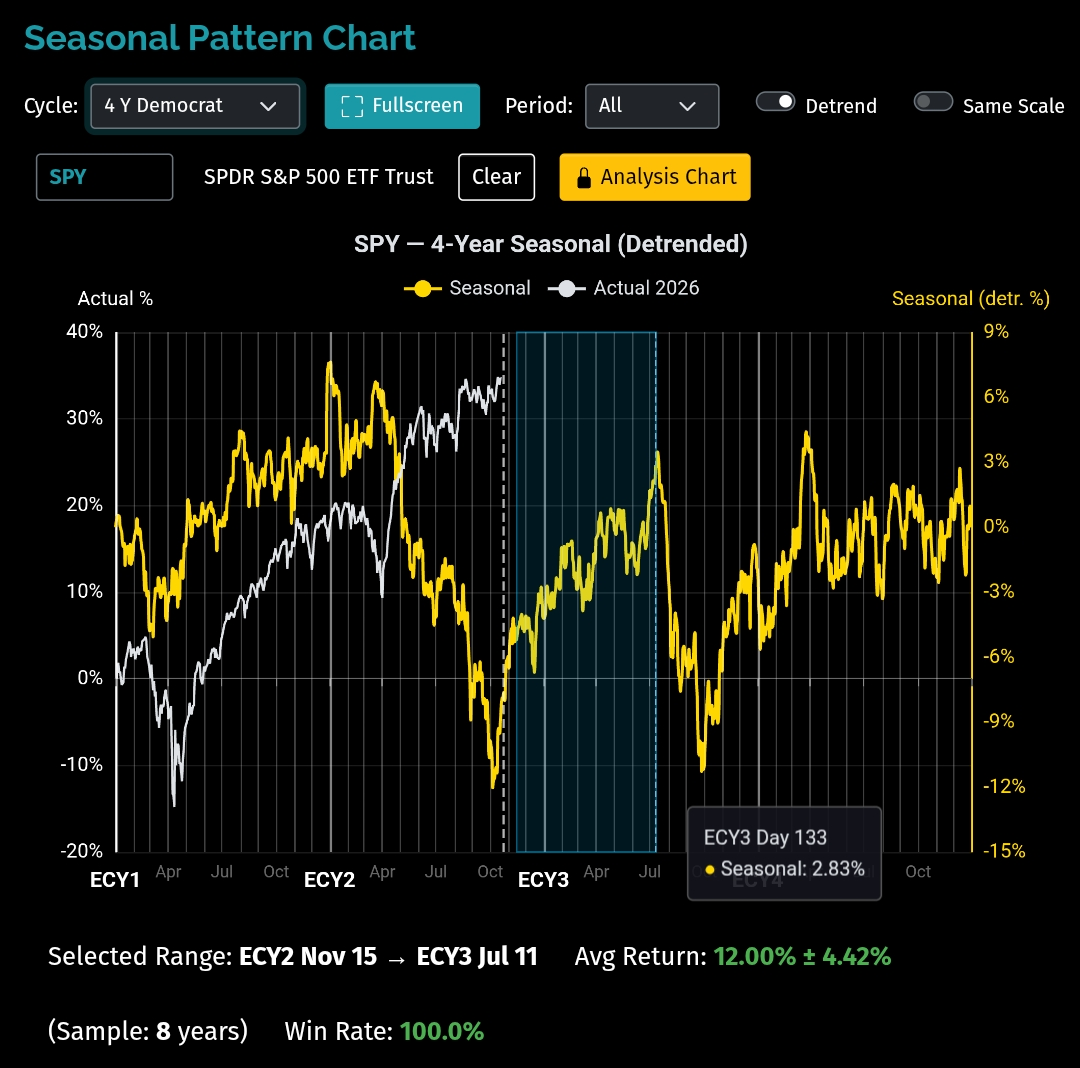
Under Democratic presidencies, equities typically rally right after the midterms.
However, this year's market correlation with general seasonality is not exceedingly high, so the main question is:
Market Optimism: The Lame-Duck Scenario
Markets may welcome a politically constrained Trump administration post-midterms, as divided government could limit major legislation and reduce policy uncertainty. Wall Street has historically favored gridlock: the S&P 500 gained 28.9% in 2019 after Democrats regained the House in 2018, though Fed easing also contributed. Per Morgan Stanley, the S&P 500 has historically gained an average of 23% in the year following midterms under Republican presidents with a divided Congress. Persistent fiscal deficits and rising Treasury yields could undermine this optimism.
At Markets in Vitro we believe that with rising yields and geopolitical instability, markets will transition from a buy-and-hold AI/index trade to a stockpicker's market. We offer one of the best tools to screen Dark Pools and insider trades, technical patterns and regimes across all US stocks in our versatile Screener.