▶ Watch this as a video on YouTube
After soaring more than 400% in less than a year, AI-focused hedge fund Situational Awareness reportedly lost around 67% in July, triggering margin pressure on its highly leveraged portfolio. Rather than allowing a disorderly liquidation that could have sent AI stocks into another downward spiral, Citadel stepped in and acquired most of the fund’s publicly traded equity positions in a block transaction.
The deal has fueled intense speculation across the investment community. Some investors believe Citadel simply capitalized on a rare opportunity, using its deep balance sheet to stabilize the market while acquiring high-quality AI assets at distressed prices. Others have gone further, questioning whether sophisticated market participants may have anticipated—or even helped accelerate—the selling pressure that forced the fund into a sale. At this stage, there is no public evidence supporting claims of market manipulation, and major news outlets describe the transaction as the result of leverage, margin calls, and exceptional market volatility. Still, the episode serves as a powerful reminder that in highly leveraged markets, liquidity can be just as valuable as technology itself—especially when technology meets the margin clerk.
Volatility measures were the only components to decrease over the course of 24 hours.
Composite Risk Indicator
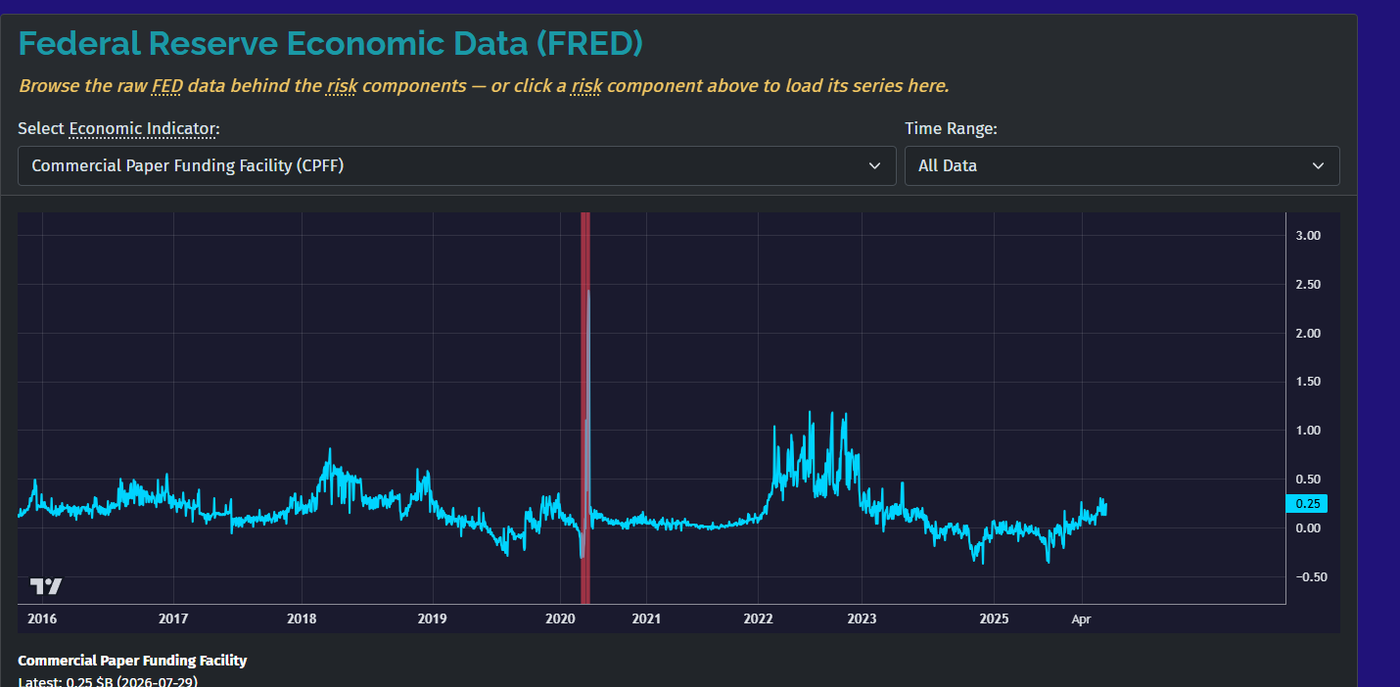
Rising Risk - Commercial Paper Funding
The recent uptick in the Federal Reserve’s Commercial Paper Funding Facility (CPFF) usage suggests that a small number of market participants are facing higher short-term funding pressure. While current levels remain far below those seen during systemic crises such as 2020, the increase may indicate that some corporations or financial institutions are finding it more expensive—or temporarily more difficult—to roll over their commercial paper in private markets. This pressure is primarily driven by tighter financial conditions, elevated short-term interest rates, reduced investor demand for lower-rated commercial paper, and growing caution among money market funds. At present, the signal points to isolated liquidity stress rather than a broad funding crisis, but it is worth monitoring for signs that financing conditions are deteriorating more widely.
A modest rise in commercial paper funding stress has caught investors’ attention, suggesting that short-term financing conditions are becoming less accommodating. While current levels remain far below those seen during systemic crises, higher funding costs and widening credit spreads indicate that lenders are becoming more selective. Rather than pointing to a broad liquidity crunch, the signal appears concentrated in a handful of highly leveraged borrowers facing heavy refinancing needs amid elevated interest rates. As ever, bond math remains a harsh grader.
Among the companies drawing the most scrutiny is Oracle, whose five-year credit default swaps (CDS) have risen well above those of most large-cap technology peers as the company ramps up debt-funded AI infrastructure investments. CoreWeave also remains in focus after paying significantly higher yields and accepting stricter lending terms to secure fresh financing, highlighting growing investor caution toward highly leveraged AI infrastructure plays. By contrast, Meta and Nvidia continue to enjoy relatively strong credit profiles despite a recent increase in CDS spreads. For now, the message from credit markets is clear: investors remain willing to finance the AI boom—but they are becoming far more selective about who receives that capital. Free cash flow, unfashionably, still matters.
Not only did we see upward crashes in the beaten-down Semiconductor and AI stocks, but there are more earthquakes across the whole global financial system.
After the South Korean market touched the 200-day moving average, it rebounded sharply, leading the whole AI and Semiconductor sector higher.
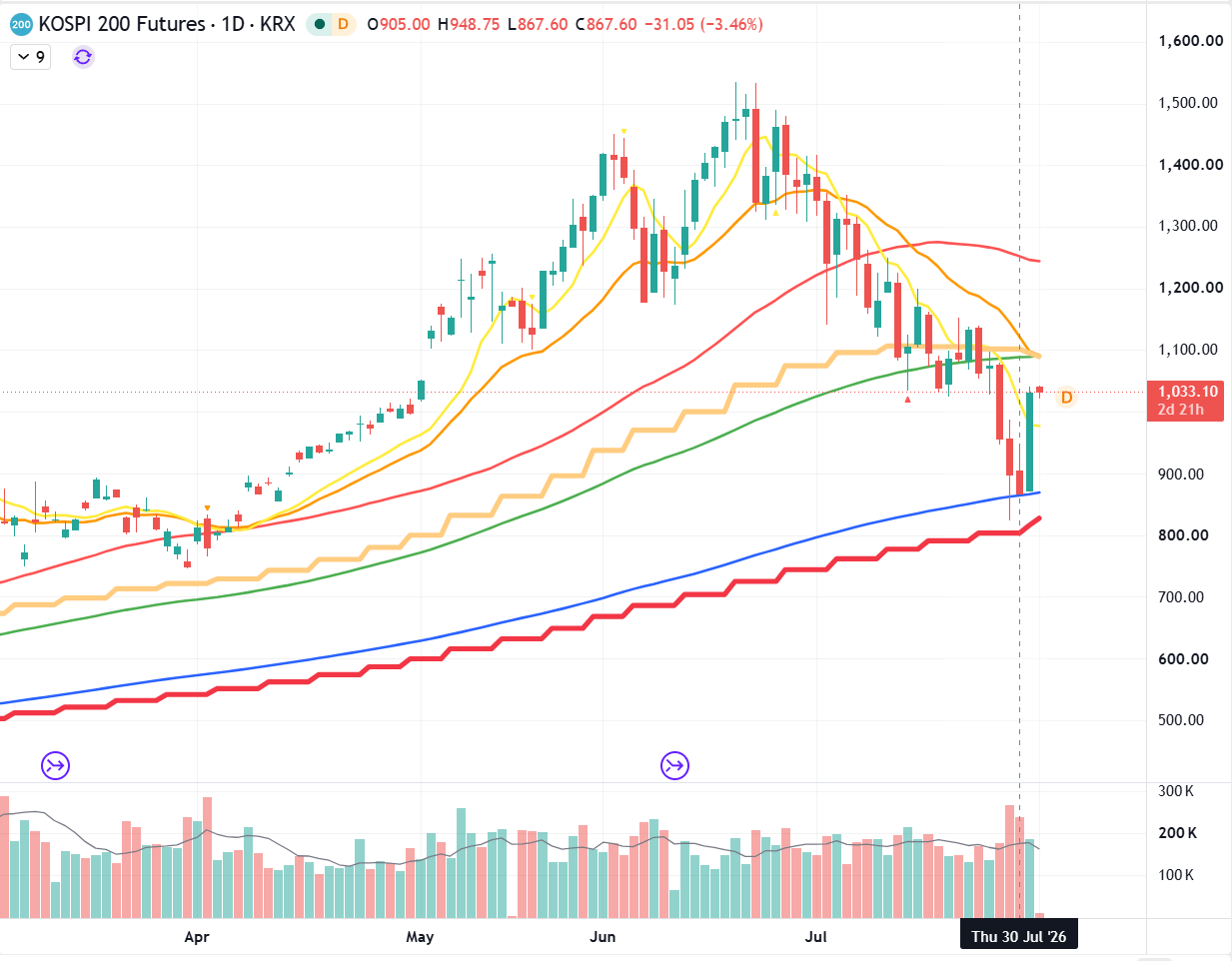
The South Korean Index rebounded from a major support level
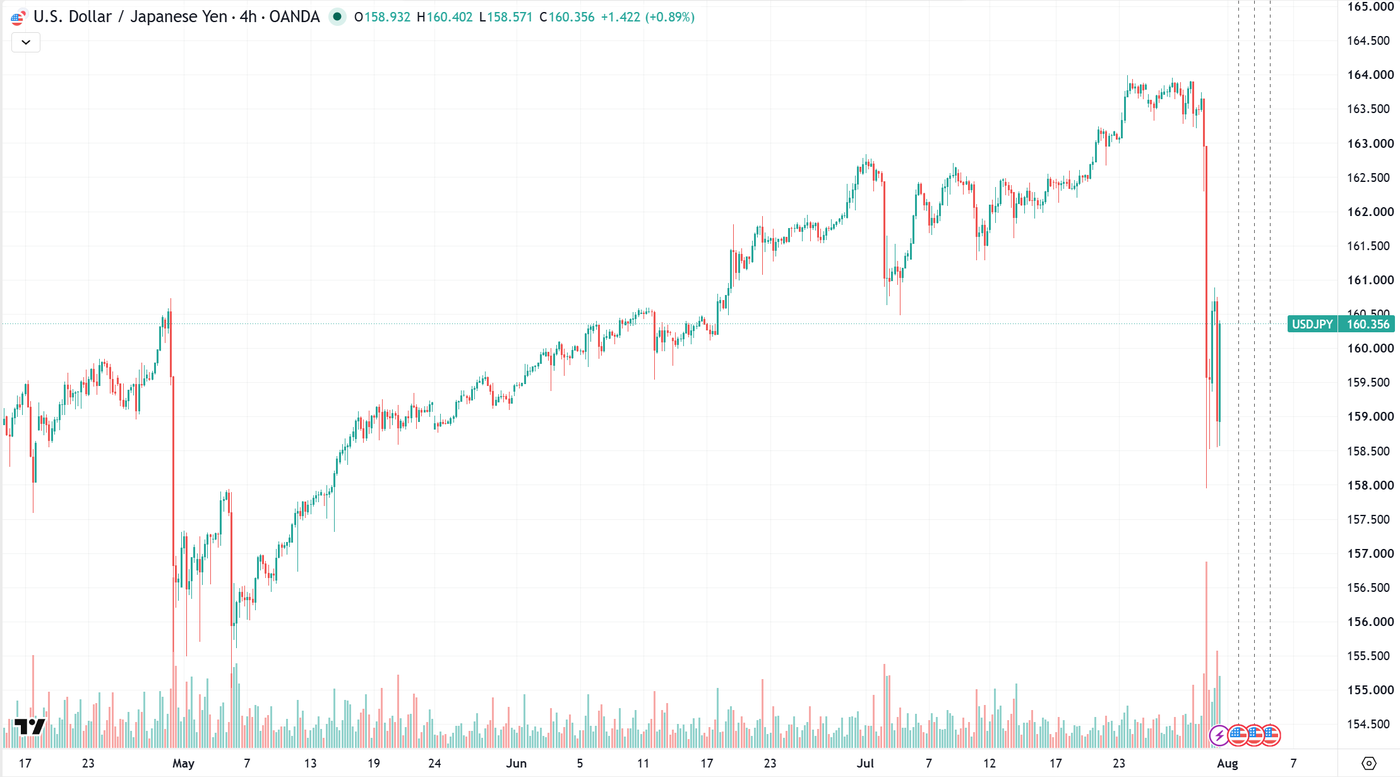
US Dollar vs Japanese Yen
The Japanese yen staged a sharp rally against the U.S. dollar after traders widely interpreted a sudden move in USD/JPY as another intervention by Japan’s Ministry of Finance. With the currency having weakened to multi-decade lows, authorities appear increasingly determined to slow the pace of depreciation and curb rising import costs, according to Reuters. The move also triggered a wave of carry-trade unwinding, as investors rushed to cover short yen positions following months of one-way positioning, amplifying the rally (Saxo Bank). While the intervention delivered an immediate boost to the yen, most analysts believe the longer-term direction of USD/JPY will continue to be driven by the wide interest-rate differential between the U.S. and Japan, meaning official intervention alone is unlikely to reverse the broader trend (Forex.com). Thin liquidity and thick narratives rarely change that calculus.
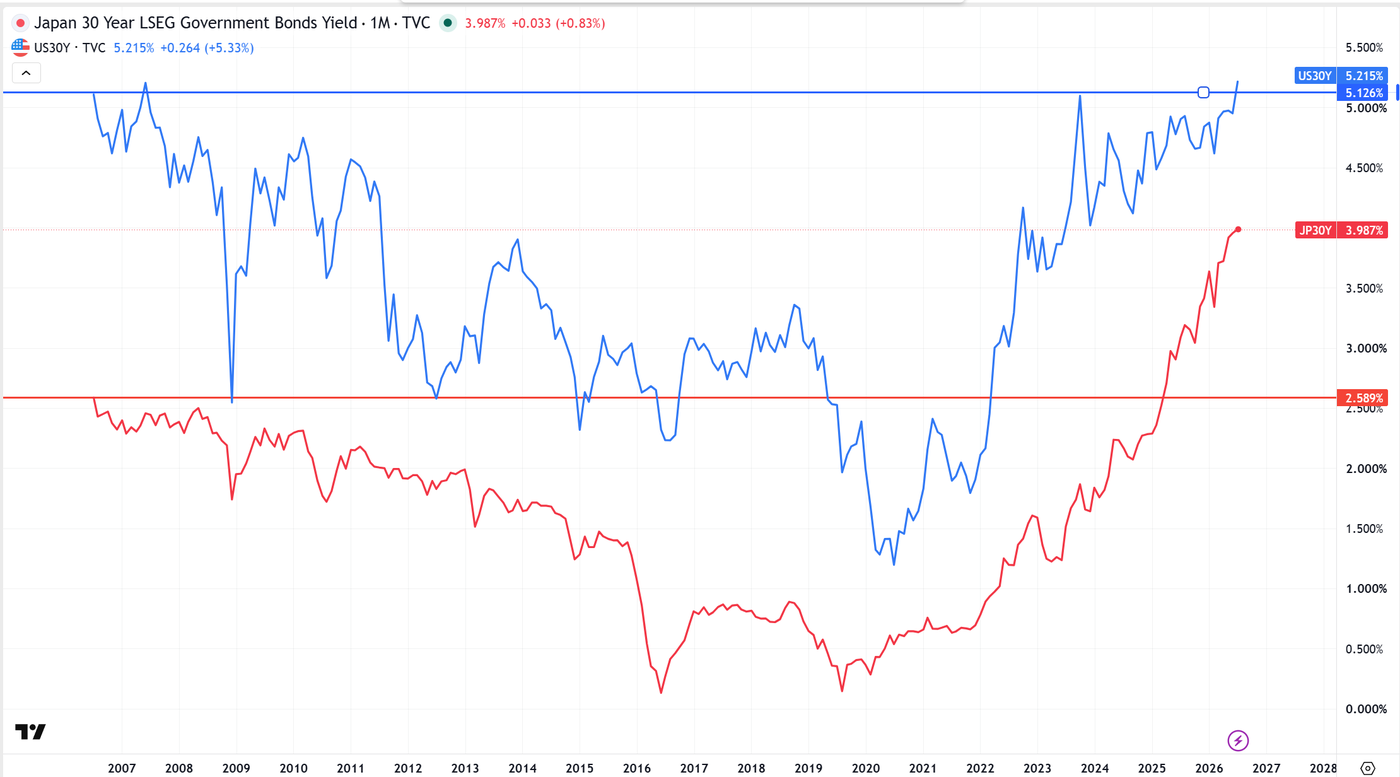
US 30y yields vs JP 30y yields
The simultaneous surge in U.S. and Japanese 30-year government bond yields marks a significant shift in the global liquidity landscape. In the United States, rising long-term yields reflect persistent inflation concerns, heavy Treasury issuance, and growing term premiums, increasing borrowing costs for governments, corporations, and highly leveraged sectors such as AI infrastructure (Reuters). At the same time, Japan’s 30-year yield has climbed to multi-decade highs as the Bank of Japan continues normalizing policy and investors demand higher compensation for holding long-duration JGBs (Reuters). The combination raises global funding costs, tightens financial conditions across capital markets, and increases credit risk for highly indebted borrowers. More importantly, higher Japanese yields reduce the attractiveness of borrowing cheap yen to finance investments abroad, encouraging carry trade unwinding and the repatriation of Japanese capital from overseas bonds and equities. If this trend tightens further, global liquidity could amplify volatility across risk assets despite continued strength in the underlying economy. A friendly reminder that duration cuts both ways.
Despite historically low global crude inventories and an increasingly fragile geopolitical backdrop, the oil futures market appears to be pricing in a surprisingly optimistic scenario. Traders continue to bet that supply disruptions will prove temporary, expecting diplomatic progress, higher OPEC+ production, and an eventual normalization of shipping through the Strait of Hormuz. Yet the physical market tells a very different story. Energy infrastructure in both Russia and the Middle East continues to come under attack, insurance costs for tankers remain elevated, and key maritime routes are still operating under significant risk, according to Reuters. At the same time, refined fuel markets remain exceptionally tight, suggesting that underlying supply constraints have not disappeared—they have simply been overshadowed by expectations.
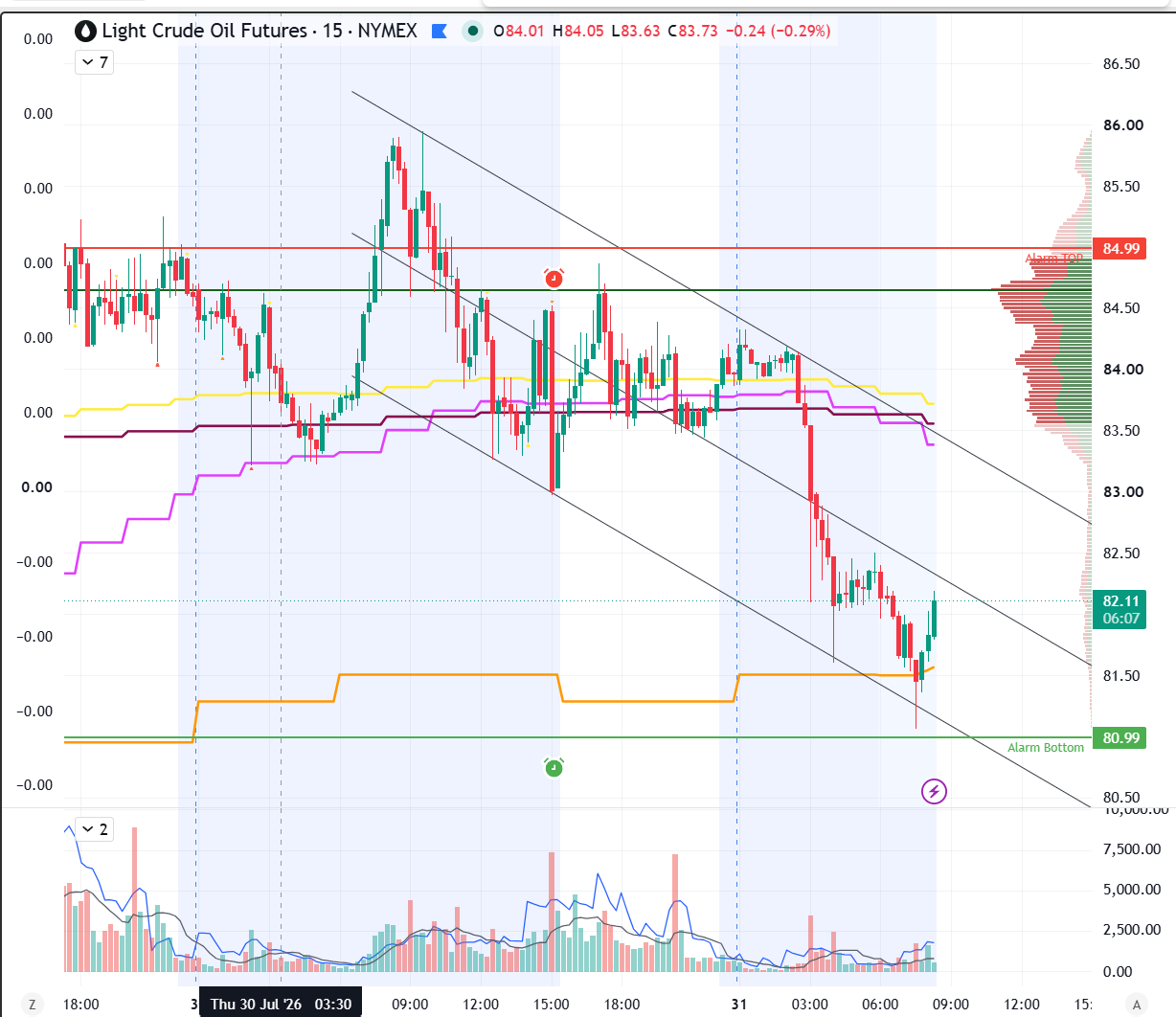
Overnight Crude Oil price action
This widening disconnect between futures pricing and physical fundamentals could become one of the market’s biggest blind spots. If traders are wrong and the Strait of Hormuz remains disrupted for longer than expected, or if further attacks remove additional production or export capacity from the market, today’s relatively modest geopolitical risk premium could prove far too low. In that scenario, oil prices may need to reprice rapidly as futures markets catch up with a reality the physical market has been signaling for months. The longer investors continue to discount deteriorating fundamentals in favor of an expected de-escalation, the greater the risk of a sharp and disorderly move higher once those expectations are challenged (Reuters; EIA).
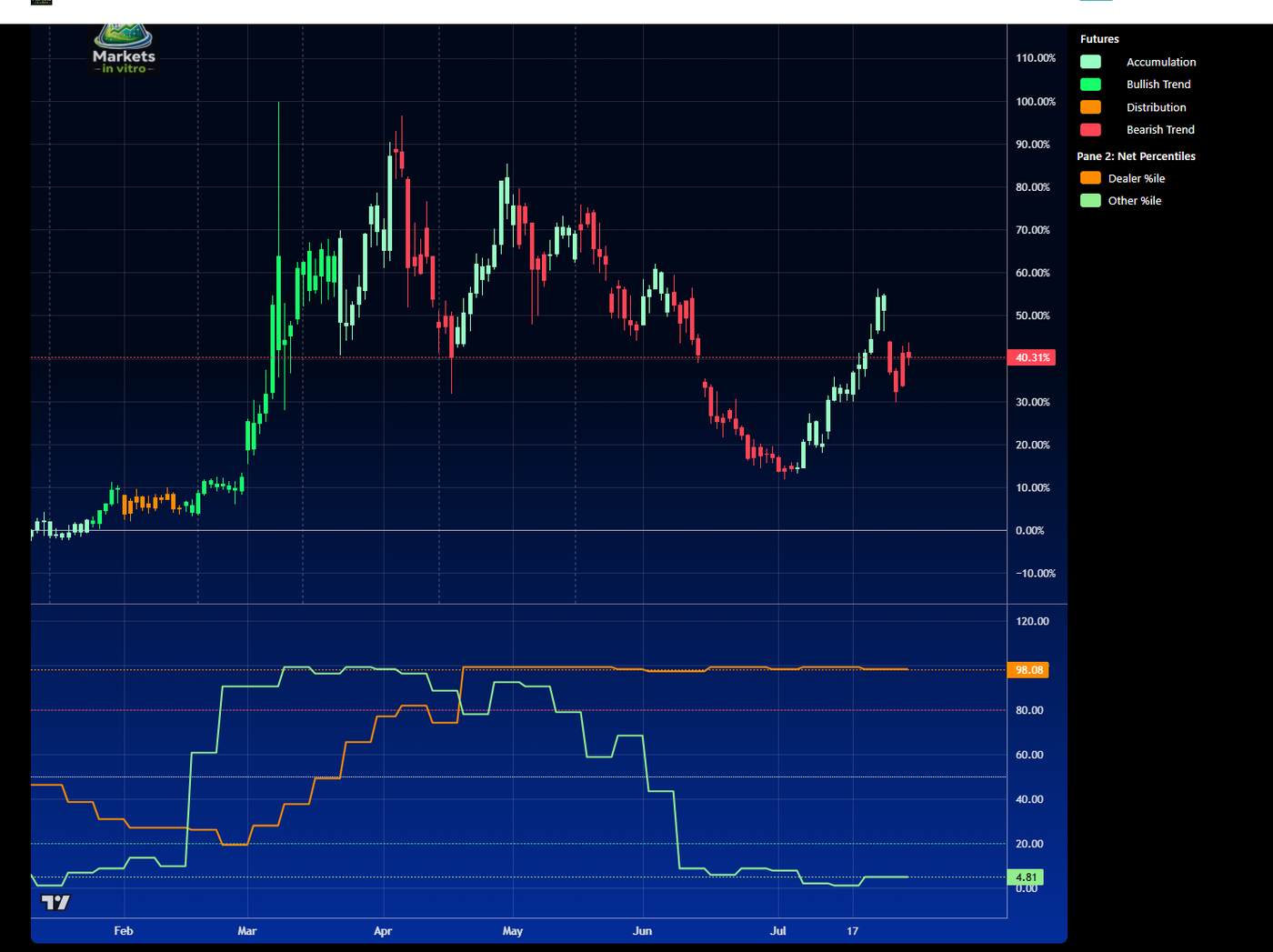
Commitment of Traders - Positioning in Crude Oil
The COT Analysis reveals strange positioning in the crude oil market: Producers started to go heavily LONG as crude prices started to rise with the escalation of the Iran war. However, they never changed their long positions and kept staying long, indicating that they never really expected the “situation” to resolve in the near term. Other Large Investors went long ahead of the rise and decreased their exposure in May and June, thus bringing oil prices down. Crude oil is a Political Trade and there is interest in bringing prices down against any fundamentals. However, in the long run, markets tend to approach their fundamental equilibriums and, with the depletion of U.S. oil inventories and a rising demand outlook, lower oil prices don’t make any sense—especially in the context of more and more burning oil refineries in Russia and the Far East. With every day, it becomes less likely that the Strait of Hormuz is going to open soon. This story has the potential to crash the global economy, as a result of egocentric, short-sighted, populist policies of the one-man show in the current U.S. administration.
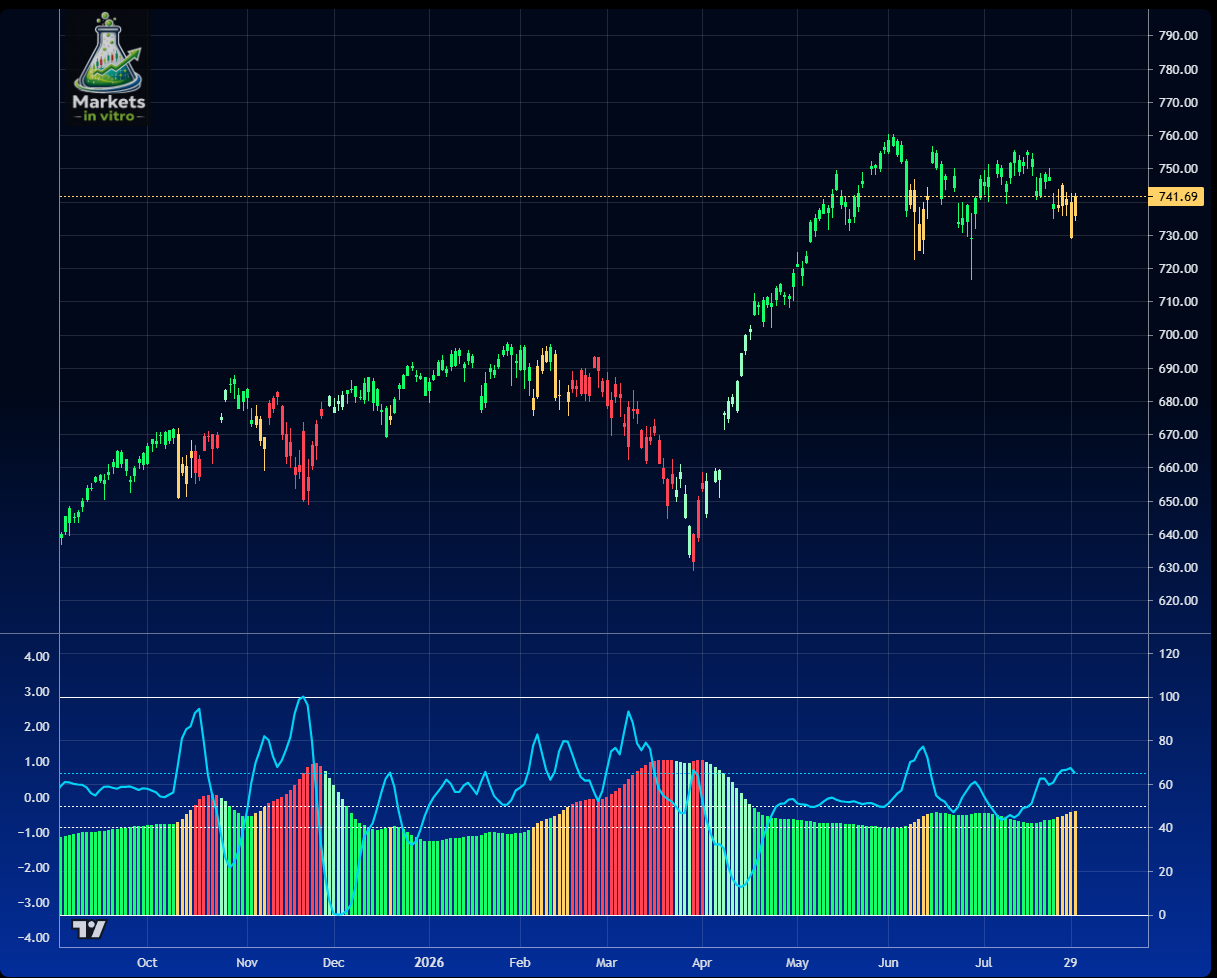
The market rebounded strongly at the Accumulation level around 7300. We did expect this; however, the intensity of this rebound was unexpectedly enormous. Sometimes the tape reminds everyone who’s in charge.
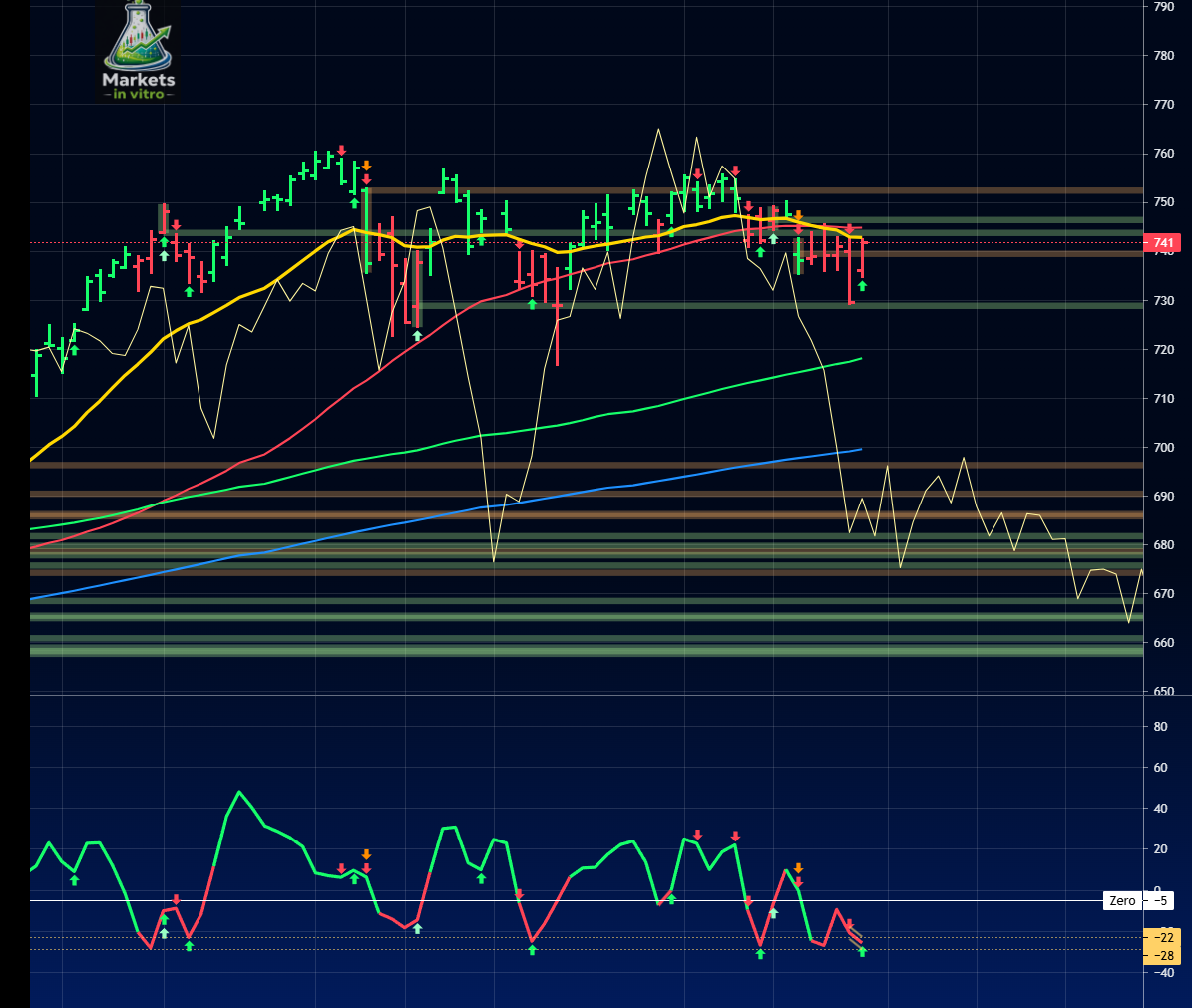
Smart Money Tracker
The AI trade appears to be entering a new phase. For much of the past two years, investors rewarded virtually every company with an AI narrative. That dynamic is now shifting toward execution over expectations. Microsoft’s earnings demonstrated that AI infrastructure investments are translating into accelerating cloud revenue and tangible returns, while Meta reminded the market that massive capital spending without near-term cash flow comes at a cost. Investors are becoming increasingly selective, rewarding companies that can monetize AI while scrutinizing those relying solely on future promises (Reuters). Storytime is giving way to statements of cash flows.
For semiconductor and AI infrastructure companies, the long-term outlook remains constructive, but the path is likely to become more volatile. Demand for GPUs, networking equipment, memory, power infrastructure, and data centers continues to exceed supply, yet higher long-term interest rates, widening corporate credit spreads, and tighter funding conditions are raising the cost of capital across the sector. The recent collapse of the highly leveraged AI hedge fund Situational Awareness further highlighted how technical positioning and leverage can temporarily overwhelm fundamentals. If capital markets remain supportive, AI infrastructure leaders should continue to outperform. However, the next leg of the AI bull market is unlikely to be driven by multiple expansion alone—it will require sustained earnings growth, disciplined capital allocation, and clear evidence that AI investments are generating durable cash flows. In other words, spreadsheets over slogans, at least for a while.
Sources