Market Analysis
The market is falling again — and nobody seems to know why.
CNBC says it’s about “AI valuation concerns” and Palantir’s earnings miss.
Cute. But that’s like blaming the waiter for the restaurant burning down.
The truth is simpler and uglier: the money pipes are clogged.
Liquidity — the cash that keeps markets moving — has quietly dried up.
And this time, there’s no breaking news, no war, no Fed hike to point at. Just slow suffocation.
Meanwhile, the chart looks like a car crash, the door wide open to 6500.
Big players are selling, small investors are buying “bargains,” and the market shrugs.
We’ve all been there:
“I bought the dip, but it keeps dipping.”
It’s a déjà vu of the Trump years — except now, the damage runs deeper and quieter.
Background: How We Got Here
Let’s be honest — the U.S. never really cleaned up after 2020.
We patched over structural issues with stimulus, cheap debt, and more debt on top.
Now those patches are peeling.
Money is trapped where it shouldn’t be, government dysfunction keeps freezing cash flows,
and the financial system is once again learning that liquidity isn’t infinite.
Ironically, the same man who once tanked markets with 280 characters —
yes, Trump and his China war tweets of October 10th —
might soon preside over a market that’s imploding without a single tweet.
He didn’t break the system alone. But he surely taught it how to crack loudly.
1. Government and Banks – When Washington Keeps the Cash
When the U.S. Treasury hoards money instead of spending it, the banking system gets starved.
That’s what’s happening now: the Treasury General Account (TGA) at the Fed has swollen toward $1 trillion.
Every dollar parked there is a dollar not circulating through the economy.
As the Federal Reserve explains:
“Large swings in the TGA can drain reserves from the banking system.”
In plain English: Washington’s cash pile acts like a vacuum cleaner sucking liquidity out of markets.
Or as one analyst joked:
“We moved money from banks to a black-hole account, and markets blinked.”
That’s not monetary policy — that’s financial dehydration.
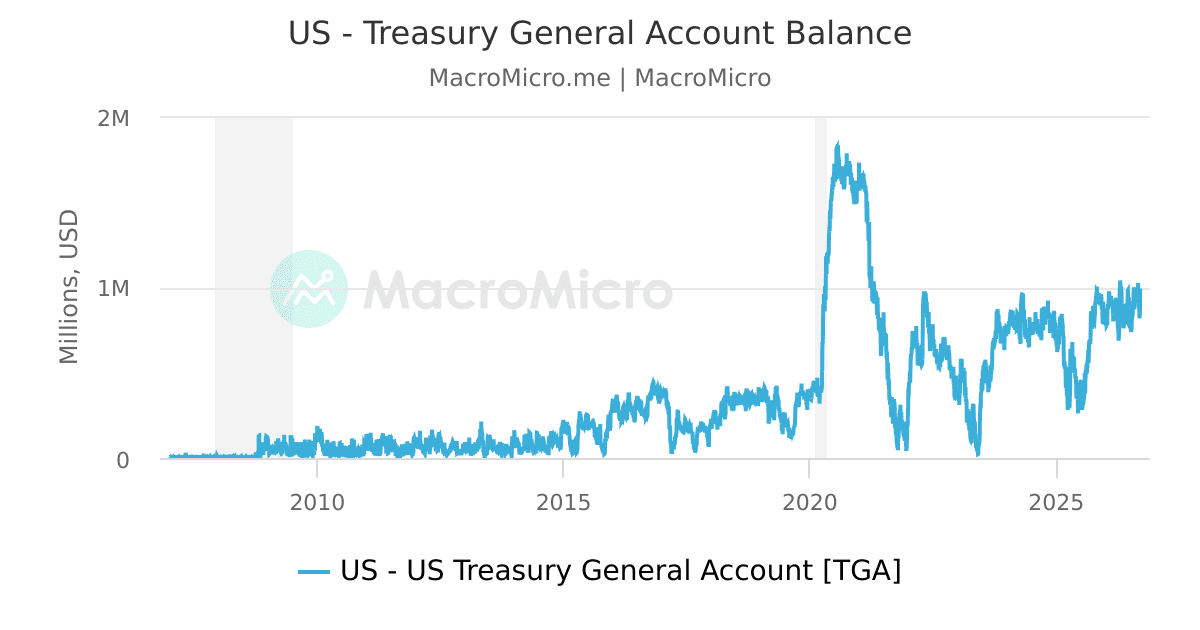
Caption: US Treasury’s TGA balance (billions USD) — when the government tanks cash in its account, banks feel the squeeze.
2. The Shutdown That Froze the Flow
If you wonder why there’s suddenly less money sloshing around, look no further than Washington.
The latest government shutdown didn’t just close national parks — it quietly froze billions in federal spending.
No paychecks, no contracts, no payments. That’s a liquidity freeze, not just a political one.
As The B Sideway noted:
“The ongoing shutdown has quietly deepened the liquidity crunch.”
Trump’s trade wars were loud.
This crisis is silent — and arguably more dangerous.
Because you can’t tweet your way out of missing cash.
3. SOFR: The Quiet Signal of Stress
The Secured Overnight Financing Rate (SOFR) — the interest rate banks charge each other overnight —
has been creeping up, a subtle sign of mistrust within the system.
When SOFR rises, it means banks are less willing to lend short-term,
which in turn chokes the flow of money through the financial veins.
Think of SOFR as the market’s blood pressure: it’s going up, and no one’s calling the doctor.
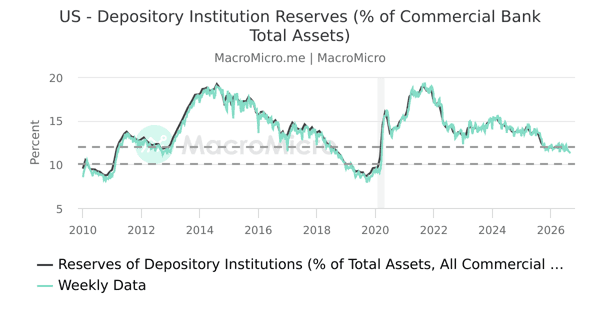
Caption: Total US bank reserves at the Fed (USD trillions) — reserves falling, plumbing tightens.
4. The Private Credit Mirage
Banks are stepping back, and private credit funds — shadow lenders with deep pockets — are stepping in.
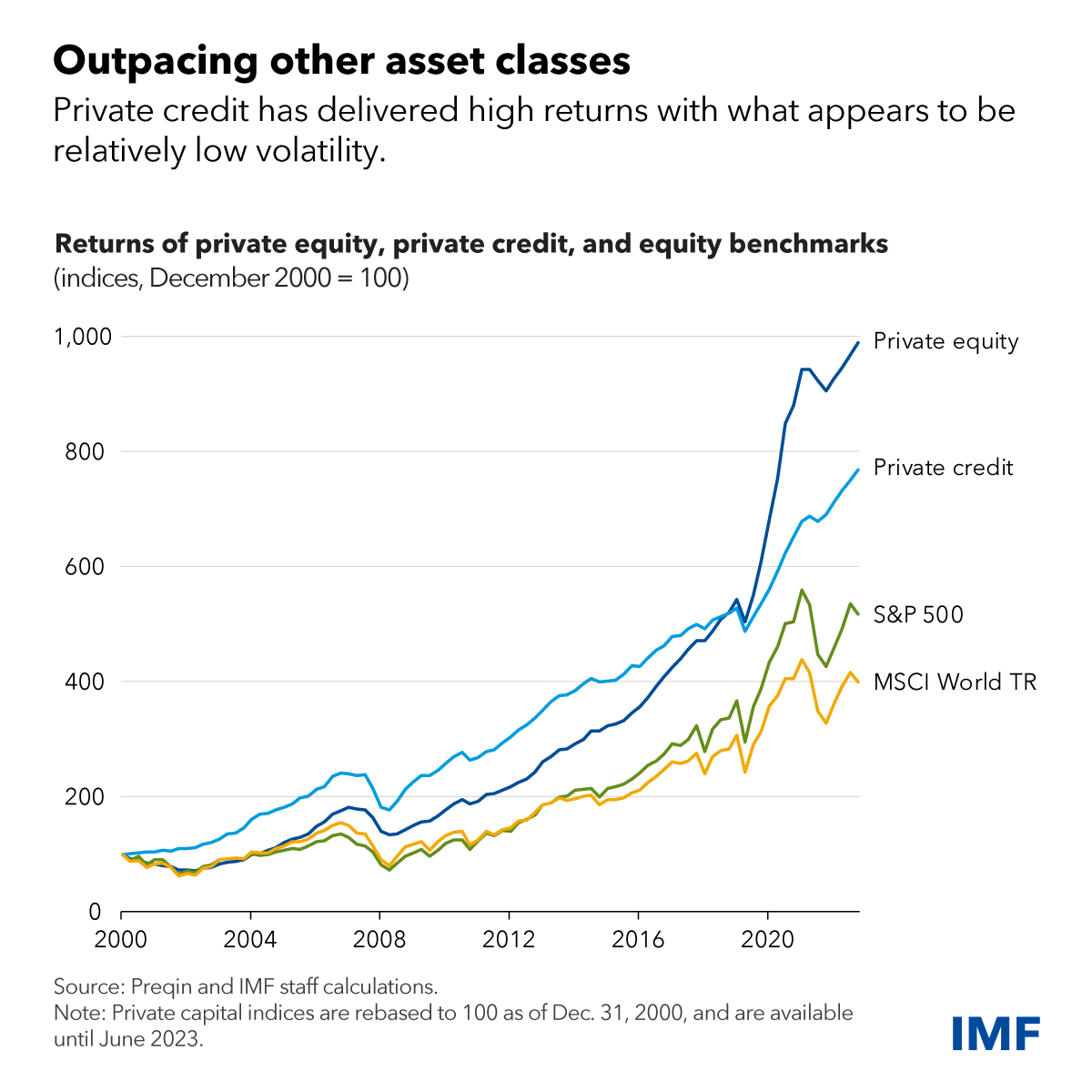
They now control over $2 trillion in loans, often made to companies that couldn’t borrow elsewhere.
It looks like innovation, but it smells like 2008.
The IMF warned that
“liquidity risks in private credit could trigger fire sales and market instability.”
Translation:
Everyone’s lending long and borrowing short,
just like the banks did before the crash — only this time without regulation or transparency.
Caption: US private credit market (USD trillions) — rapid growth, new risks in the plumbing.
Expert Warnings
Even the mainstream press is catching up.
As Merkur.de reports:
“Experts warn that signs of an economic downturn are mounting in the United States. The labor market is losing momentum, and consumer spending is weakening. The recent market correction reflects a growing fear that the U.S. economy could slide into recession.”
(Merkur.de, 2025-11-04)
So yes — Trump broke the global trade order years ago,
but Washington’s inability to spend, regulate, or even stay open finished the job.
The problem isn’t just political chaos.
It’s that the markets have learned to run on denial — and denial doesn’t buy liquidity.
Conclusion
This correction doesn’t need villains or headlines.
It’s what happens when a system built on cheap cash finally realizes it’s broke.
Liquidity is the oxygen of the market, and right now, we’re all short of breath.
“Maybe it’s not fear that moves markets anymore.
Maybe it’s the lack of cash to buy the dip.”
Sources:
Reuters •
Federal Reserve •
IMF Blog •
The B Sideway •
Merkur.de