⚠️ Market Analysis
!!! Due to the ongoing U.S. Government Shutdown, critical data releases remain suspended — the SP500 Indicator cannot currently be calculated. !!!
Still, several signals point toward rising market risk. The HYG ETF has turned lower, reflecting weakening investor appetite for high-yield corporate debt.
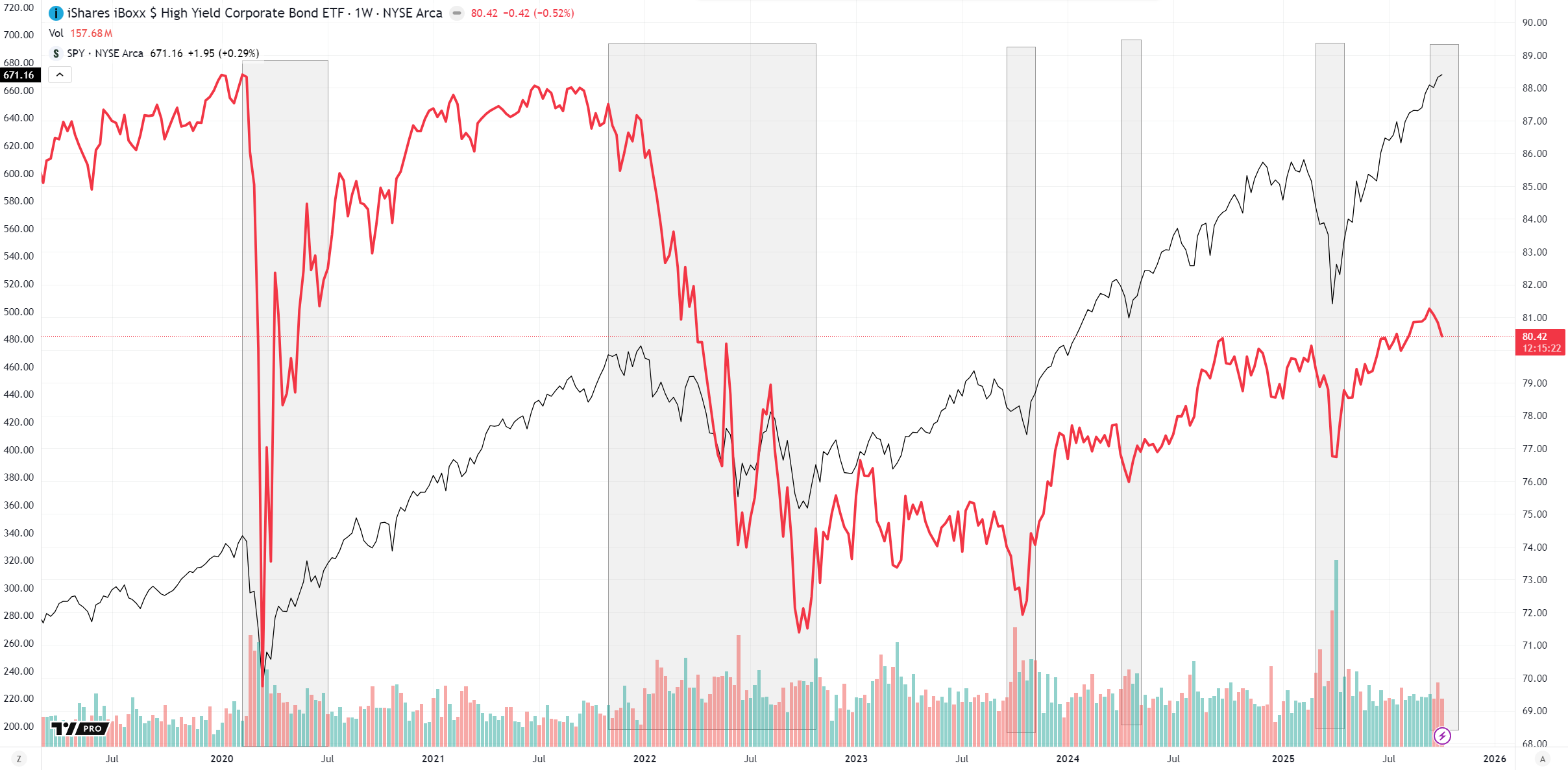
What is the HYG ETF?
The HYG ETF (iShares iBoxx $ High Yield Corporate Bond ETF) tracks the U.S. high-yield, or “junk,” corporate bond market — debt issued by companies with lower credit ratings and higher default risk. It offers exposure to the riskiest segment of corporate debt, rewarding investors with higher yields in exchange for greater credit risk.
What does its movement signal?
When HYG rises, investors are showing confidence and a willingness to take on more risk.
When HYG falls, as it does now, it signals rising risk aversion, tightening financial conditions, and growing concern about corporate credit stress. In short, HYG serves as a barometer of market risk perception.
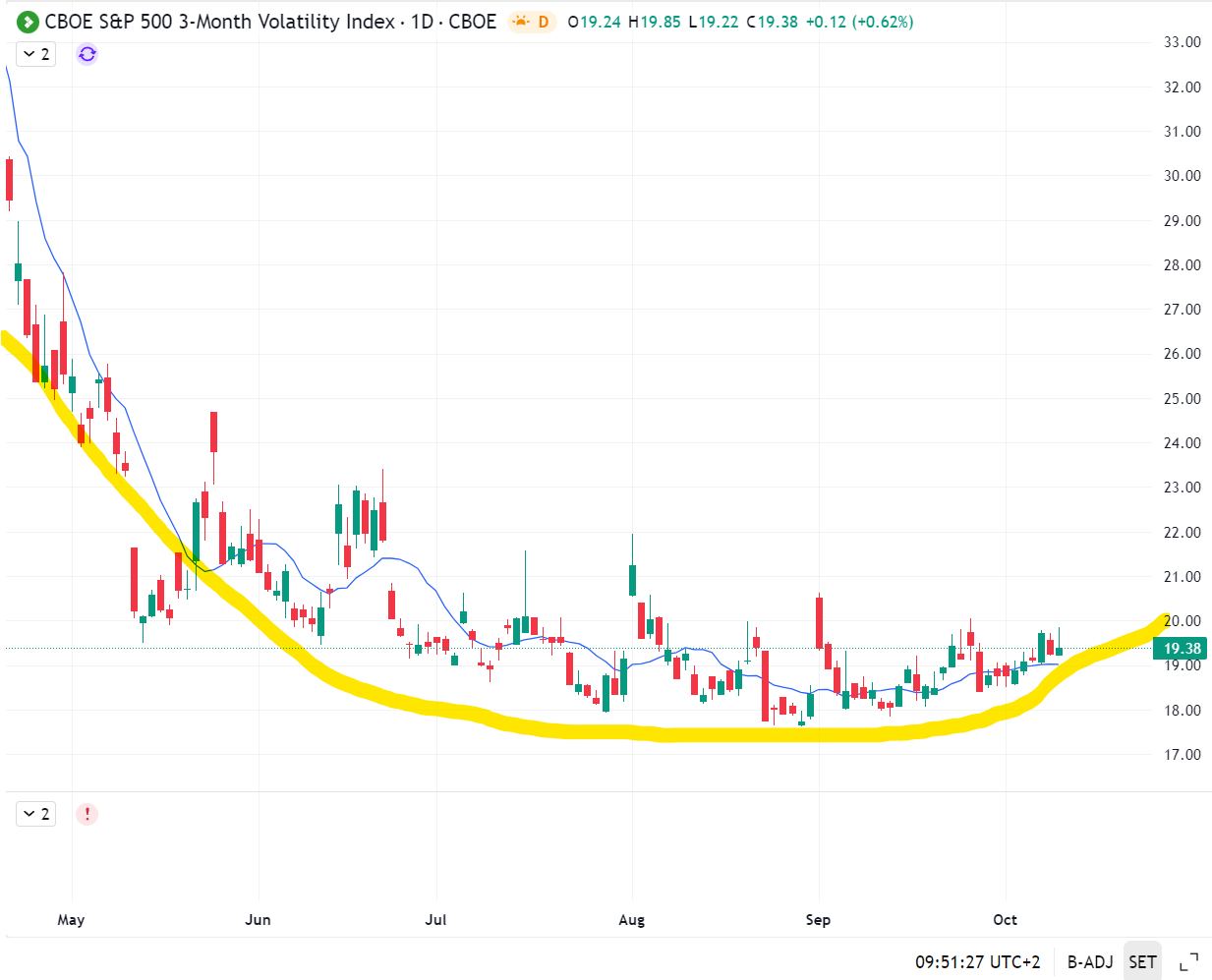
At this stage, there are still few clear signals of broad stress. However, the 3-month VIX has shifted into an uptrend, marking the first sign of increased volatility expectations.
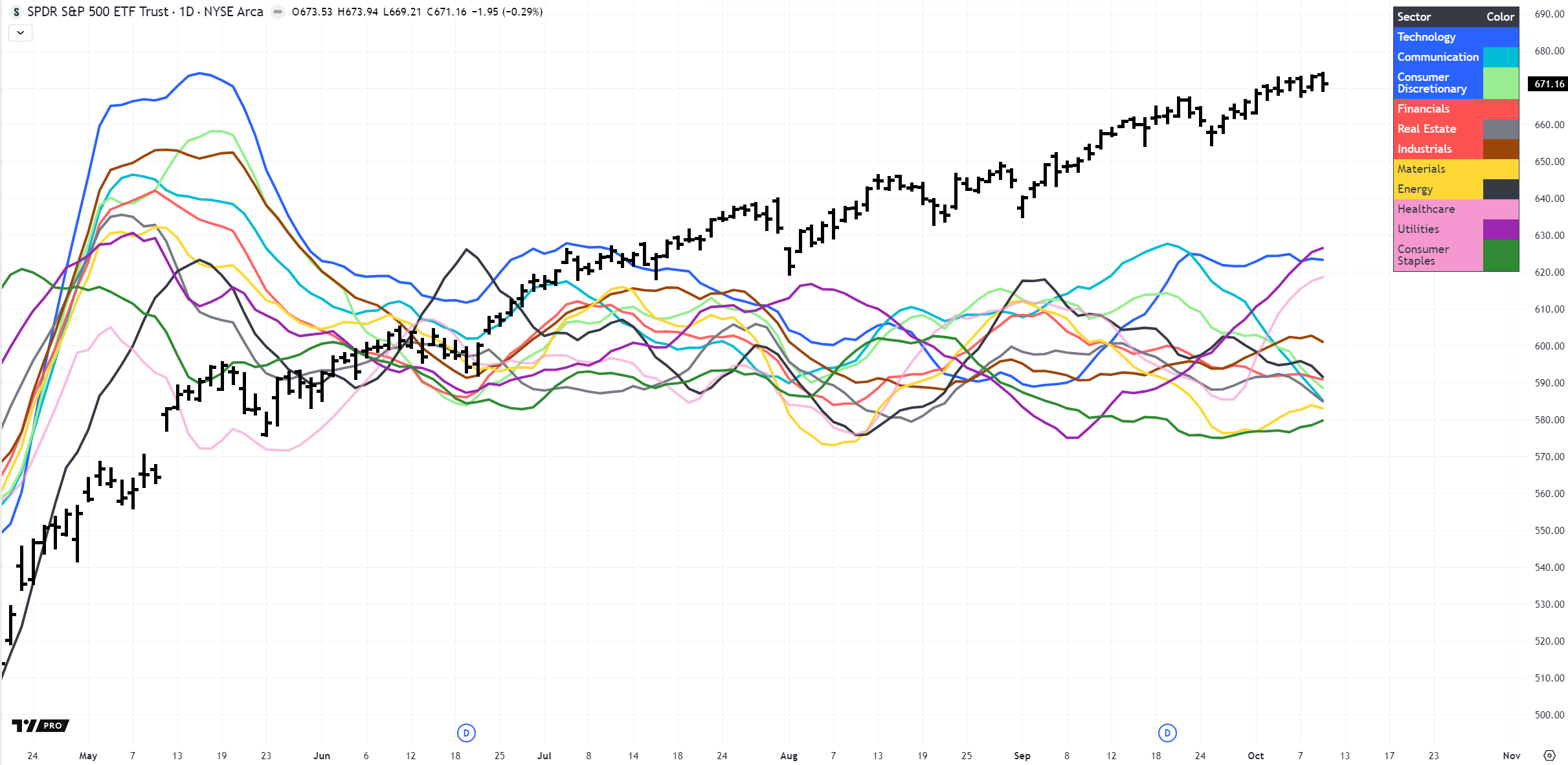
Sector rotation further supports this defensive stance — Utilities and Healthcare are outperforming, while cyclical and speculative sectors show fatigue.
💣 Which Bubble Will Pop First?
Current Market Risks and Potential Bubbles (October 2025)
📉 Key Market Risks
-
Elevated Valuations & Narrow Leadership
U.S. equity markets — particularly the S&P 500 — remain expensive, driven largely by a handful of mega-cap AI and tech stocks. This concentration leaves markets fragile if those leaders lose momentum.
Reuters -
Economic Slowdown & Labor Weakness
Hiring momentum is fading, unemployment claims are creeping higher, and growth indicators are softening. A soft landing is still possible, but far from assured.
Morgan Stanley -
High Rates & Persistent Inflation
Central banks may need to keep rates higher for longer, squeezing growth and refinancing activity across credit and real estate markets.
Schwab -
Fiscal & Debt Stress
Government deficits, rising sovereign debt, and leveraged corporate balance sheets create systemic fragility if shocks hit the system.
American Century -
Geopolitical Uncertainty
Ongoing U.S.–China trade tensions, wars, and regulatory shifts continue to act as unpredictable wildcards for global risk sentiment.
Steptoe Risk Outlook
🏦 Possible Bubbles “About to Pop”
-
AI / Tech Mania
The AI rally resembles the dot-com era, with chipmakers and AI software stocks trading at extreme valuations.
FT · Axios -
Commercial Real Estate (CRE)
The sector faces a refinancing cliff as high rates and low office demand collide. Defaults and repricing risks are increasing.
PBMares -
Residential Real Estate
The UBS Global Real Estate Bubble Index highlights Miami, Tokyo, Zurich, L.A., and Dubai as high-risk markets with stretched price-to-rent ratios.
UBS Bubble Index -
Corporate & High-Yield Debt
Despite higher rates, junk-bond markets remain buoyant. A sudden loss of confidence could trigger defaults and contagion — watch HYG for early stress signals.
FT -
Sovereign Debt & Fiscal Fragility
Over-levered nations and emerging markets could face capital outflows and funding shocks if global rates remain high.
BBH
⚠️ Early Warning Indicators
- Widening credit spreads
- Rising corporate default rates
- Weakening market breadth
- Inverted yield curves
- Rising volatility (VIX)
- Slowing earnings momentum
- Tightening liquidity conditions
🧭 Outlook
The financial landscape shows all the hallmarks of a late-cycle environment — high valuations, rising leverage, and complacent volatility.
No single bubble may burst immediately, but the combination of overconfidence, liquidity withdrawal, and policy fatigue could trigger sharp corrections across multiple asset classes.
Further Reading:
- High stock valuations spark investor worries
- IMF & BoE warn AI boom risks “abrupt” correction
- Jamie Dimon: “I’m far more worried than others.”